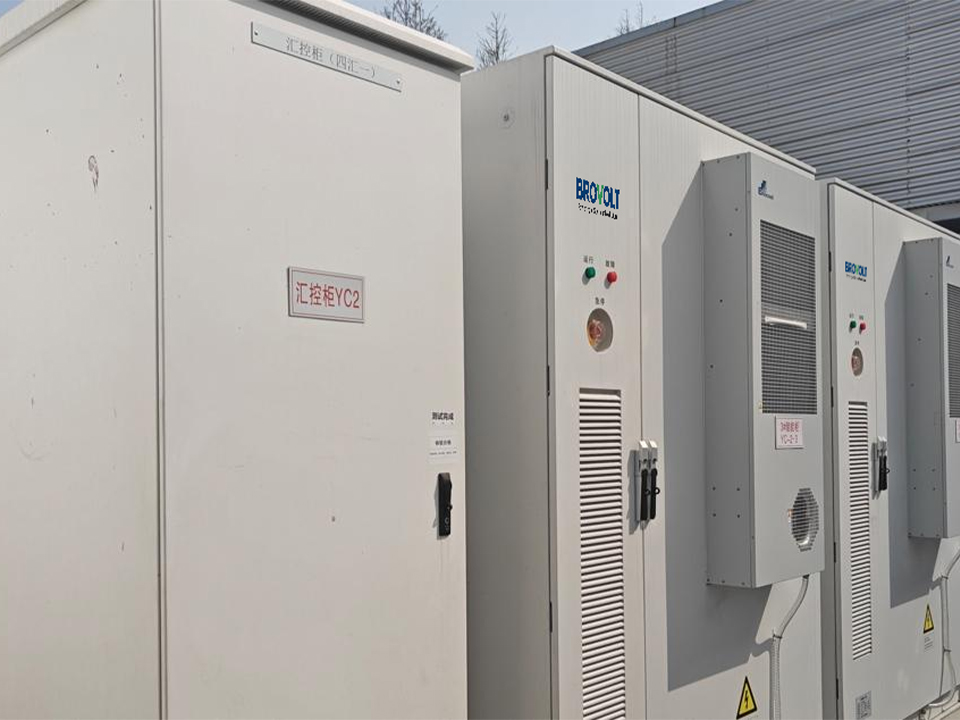
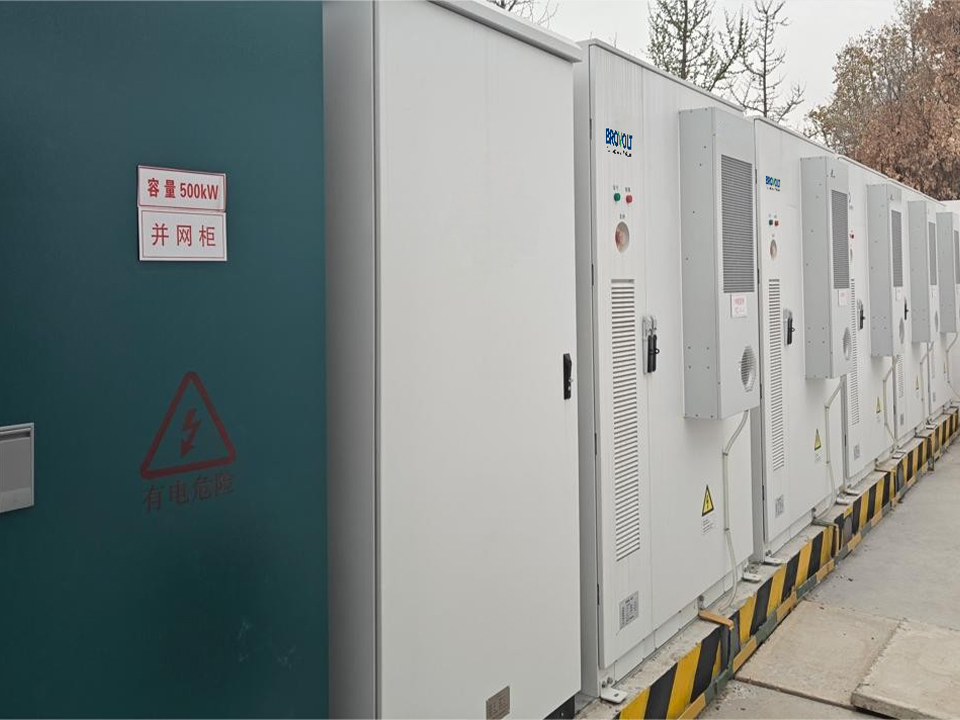
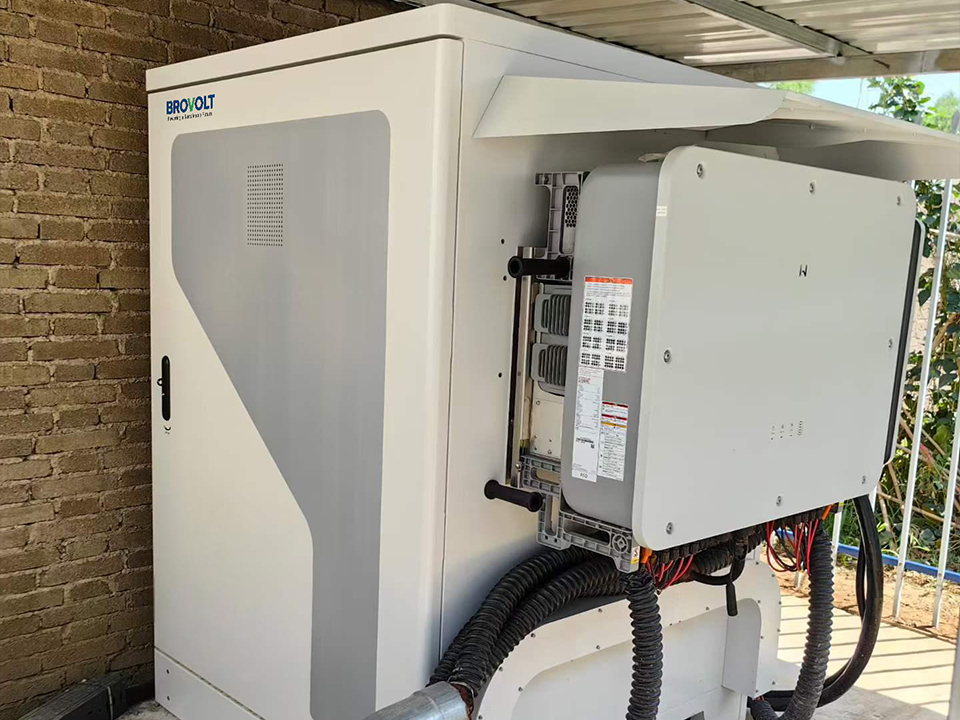
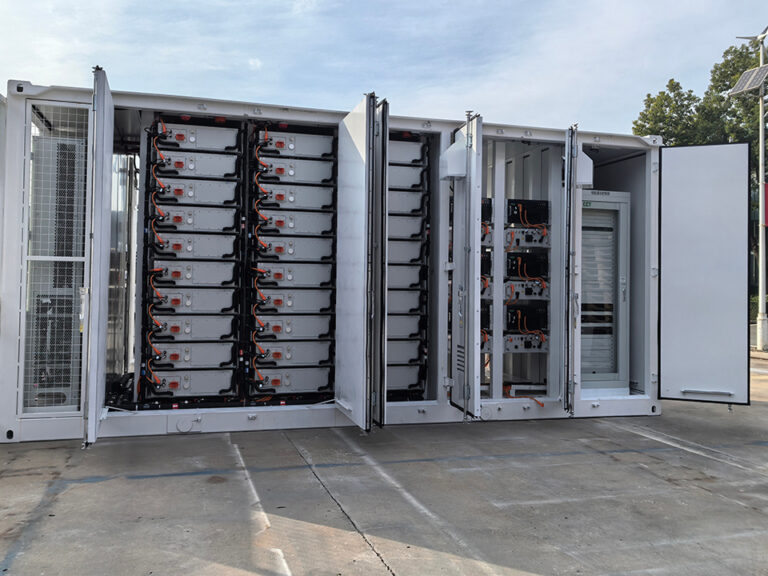
Tell us what you need before you leave. Share your target voltage, capacity, application, order quantity, and destination market, and Brovolt will help you evaluate the right LiFePO4 battery solution.
Get a tailored recommendation, technical guidance, and a fast quotation for your OEM, residential, commercial, or industrial energy storage project. Our team is ready to support your next step today.
Hardware-in-the-Loop Testing for BESS Control Integration Guide
Hardware-in-the-loop testing exposes BESS regulate defects that normal simulation and manufacturing facility checks regularly miss out on. This guide describes CHIL, PHIL, real-time modeling, fault shot, approval requirements, and system option.
A battery power storage controller can pass scripted factory checks, communicate correctly under ideal problems, and still fall short when a delayed state-of-charge message hits a voltage event, a computer restriction, and a supervisory dispatch command arriving within the same control cycle.
Why discover that after energization?
I have a blunt view: a BESS manages bundle that has actually not endured closed-loop hardware-in-the-loop screening is not fully confirmed. It is just set up.
That distinction matters much more now. The USA linked approximately 14.1 GWh, equivalent to 4.3 GWac, of grid power storage throughout the very first half of 2024– the nation’s biggest first-half implementation on record. About 45% of united state battery capability mounted in 2023 was related to crossbreed PV-plus-storage projects. Extra batteries, even more inverter-based resources, more communicating controllers, and much more methods for small configuration defects to become pricey functional events.
What Hardware-in-the-Loop Testing Really Confirms
Hardware-in-the-loop screening is a closed-loop recognition technique that connects actual control hardware to a real-time electronic model of the system it is expected to regulate.
The controller under test could be:
A battery management system, or BMS
A power conversion system controller
A power monitoring system, or EMS
A nuclear power plant controller, or pay per click
A microgrid controller
A protection relay
A real-time automation controller
A website SCADA entrance
The real-time simulator replaces selected physical possessions with mathematical models. Depending upon the test boundary, those models might represent LiFePO4 battery racks, the DC bus, bidirectional inverter, transformer, feeder, utility grid, solar generation, website loads, security devices, meters, and communications channels.
The comments loophole is the point. The controller gets voltages, currents, regularity, state of cost, temperature levels, alarm systems, breaker placements, and various other signals as though it were operating an actual BESS. Its commands are returned to the simulation, where they modify the next calculated system state.
NREL describes controller hardware-in-the-loop, or CHIL, as a setup in which physical controllers exchange signals and setpoints with a software application power-system simulation. In the mentioned examination bed, OPAL-RT carried out phasor-domain simulations at a normal 10-millisecond action and electromagnetic-transient simulations at roughly 100 split seconds. The controller was not supposed to acknowledge that its “plant” was a design.
But HIL has restrictions.
It does not verify cell production top quality, thermal-propagation efficiency, enclosure fire resistance, cable television workmanship, access defense, a/c sizing, or the mechanical stability of a battery rack. It does not change accreditation. And it does not discharge anyone from area appointing.
It proves control actions within a specified, documented examination envelope. Nothing more.
That is still tremendously beneficial.
CHIL, PHIL, and Real-Time Simulation Are Not Compatible
Groups commonly use “HIL” as a catch-all term. That is sloppy design.
Software-in-the-loop, or SIL, performs both the plant design and controller code in software program. It is fast, cost-effective, and helpful for very early algorithm growth. It does not subject cpu loading, physical I/O, firmware scheduling, protocol-stack habits, signal scaling, or controller clock troubles.
Controller hardware-in-the-loop, or CHIL, introduces the production controller or representative controller hardware. The battery, PCS, grid, and power equipment stay simulated. CHIL is normally the most effective starting factor for BESS control assimilation because it exposes genuine firmware and interactions actions without energizing megawatt-scale equipment.
Power hardware-in-the-loop, or PHIL, brings real power tools right into the loop. A grid simulator or power amplifier interfaces the digital design with a real inverter, converter, electric motor, relay, or other invigorated device. NREL keeps in mind that PHIL calls for meticulously designed settlement to preserve simulation security and precision– a caution that obtains buried much frequently in sales discussions.
Incorporated CHIL and PHIL can examine a production EMS or PPC versus a genuine computer while the battery, grid, and remaining plant are substitute. This is powerful. It is additionally harder, extra pricey, and less complicated to configure incorrectly.
My referral is easy: start with SIL, transfer to CHIL, and include PHIL just where real power-stage habits could transform the engineering final thought.
A lot more devices does not instantly create better evidence.
Map the BESS Control Heap Before Connecting the Simulator
Mistakes expose ownership.
A command can come from the energy control center, pass through a website PPC, get in an EMS, get to the computer, come across a BMS cost restriction, and then vanish right into a badly documented top priority regulation. When the active-power response is incorrect, every supplier factors at the next box.
Prevent that argument prior to screening.
A valuable control-boundary illustration needs to reveal:
Every controller and entrance
Every physical and digital I/O point
Protocols such as Modbus TCP, Modbus RTU, DNP3, IEC 61850, CONTAINER, RS485 and OPC UA
Command possession and top priority
Scaling, units, byte order and signed-value conventions
Check rates and anticipated latency
Timeout and fallback actions
Alarm system, warning and trip courses
State-machine changes
Time-synchronization resources
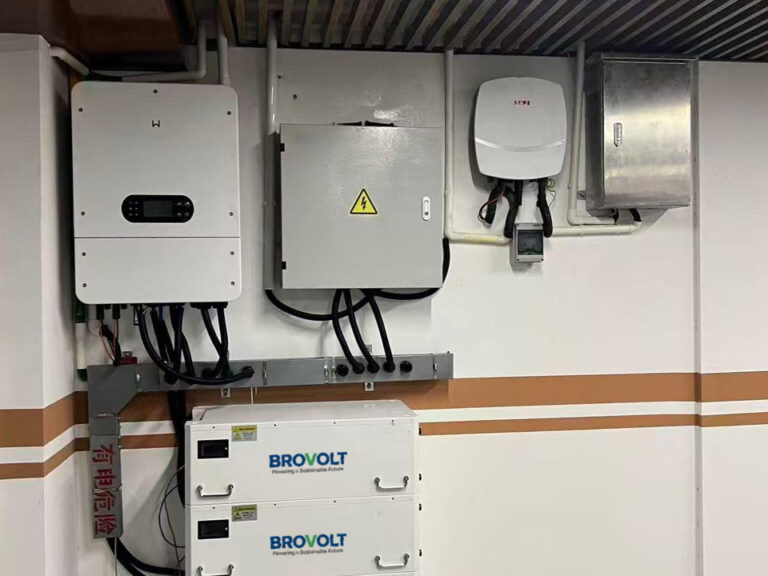
Even a relatively compact 51.2 V 100Ah rack-mount LiFePO4 household ESS battery shows the problem. Its provided front-panel user interfaces include CAN, RS485, RS232 and dry get in touch with. Each interface creates assumptions about register maps, update prices, discontinuation, alarm system handling and inverter compatibility that must be evaluated rather than presumed.
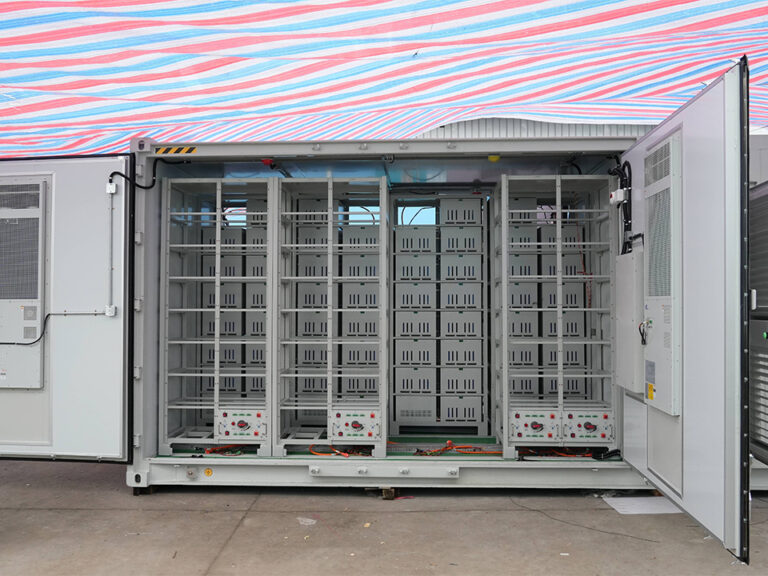
At commercial range, the border increases. A 125kW 261kWh C&I LiFePO4 power storage cupboard may include battery racks, rack BMS devices, a master BMS, PCS controls, emergency power-off logic, thermal monitoring, fire alarms and an EMS. Its released summary correctly keeps in mind that voltage array, interactions procedure and PCS compatibility have to be matched throughout assimilation.
That matching workout belongs in the HIL strategy, not in an email thread three days before commissioning.
Develop a Real-Time BESS Version That Can Be Defended
The simulator is not magic.
A lovely dashboard attached to an inaccurate battery or grid model simply creates precise-looking false information. I prefer to see a modest version with deducible presumptions than an intricate digital twin whose specifications originated from advertising and marketing brochures.
The BESS model need to represent the sensations that can impact the controller’s decisions.
For the battery side, that typically consists of:
Open-circuit voltage as a feature of SOC
Charge and discharge resistance
Current and power limits
Voltage restricts
SOC estimate habits
Temperature-dependent derating
Shelf availability
Contactor mentions
Pre-charge sequencing
BMS alarms and trips
Charge-power and discharge-power limits
Cell or shelf discrepancy, where pertinent
For LiFePO4, written chemically as LiFePO ₄, the relatively flat voltage-versus-SOC region can make estimation habits especially important. The HIL version does not require to replicate every electrochemical process, yet it needs to produce reasonable terminal behavior and believable operating restrictions.
A smaller sized 25.6 V 200Ah LiFePO4 household battery is detailed at around 5.12 kWh. That might be sufficient for evaluating low-voltage inverter interactions or BMS logic, however its design limit varies dramatically from a megawatt-scale plant with thousands of shelfs and ordered control.
For the AC side, design a minimum of:
computer energetic- and reactive-power restrictions
Ramp-rate limits
Effectiveness or loss assumptions
Present restricting
PLL or grid-forming logic
Transformer insusceptibility
Grid short-circuit toughness
Voltage and regularity disruptions
Harmonic or emergency medical technician actions where needed
Breakers and defense states
Complementary loads
Metering hold-up and error
Version integrity need to adhere to the concern being asked. A one-second send off study does not need the very same solver transmission capacity as sub-cycle ride-through analysis.
Straightforward, but overlooked.
How to Examine BESS Controls With HIL
A good BESS hardware-in-the-loop testing program follows a controlled acceleration. Random mistake shot makes an excellent demonstration; it does not make a defensible certification campaign.
1. Freeze the Examination Setup
Tape firmware variations, controller hardware alterations, specification data, register maps, version variations, solver settings, calibration data and network configuration.
Use checksums where feasible. A report linked to an unknown firmware build is barely proof.
2. Confirm Every Signal
Inspect each analog worth, electronic status, command, alarm and computed point in both instructions.
Do not quit when the values “look right.” Validate:
Engineering systems
Sign conventions
Scaling variables
Stage order
CT and VT proportions
Endianness
Timestamp source
Default worths
Stale-data behavior
Quality flags
A reversed reactive-power sign can survive weeks of common screening since unity-power-factor operation conceals it.
3. Establish Nominal Operation
Run billing, discharging, idle and standby modes across the expected SOC range.
Validate active-power tracking, reactive-power monitoring, efficiency presumptions, ramp prices, BMS limits, PCS restrictions and mode changes. The factor is to establish a clean baseline before introducing disruptions.
4. Evaluate the Limits
Command a lot more cost or discharge power than the system can deliver. Decrease readily available shelfs. Apply thermal derating. Relocate SOC towards its top and lower borders.
Which controller wins?
The system needs to honor the most restrictive legitimate limit without oscillation, duplicated mode changing, integrator windup or stale commands.
5. Inject Communications Defects
Include latency, packet loss, duplicated messages, icy worths, incorrect top quality flags, link failings and controller restarts.
This is where several or else polished systems crumble. NREL’s 2023 DERMS analysis made use of a real-world feeder design of roughly 2,000 nodes, 163 PV generators and 140 energy-storage batteries. The scientists located that the administration system became much less immune to interactions problems as details streams moved more detailed to the private DERs carrying out power commands.
Your HIL campaign should therefore test greater than a tidy Ethernet link. Genuine networks are mischievous.
6. Apply Grid Events
The needed occasion set relies on project size, affiliation needs and operating setting, yet it usually consists of:
Underfrequency and overfrequency
Undervoltage and overvoltage
Rate-of-change-of-frequency events
Stage leaps
Voltage unbalance
Weak-grid problems
Islanding
Loss of grid
Reconnection
Mistake ride-through
Black-start series
Loss of generation
Abrupt lots being rejected
Transformer energization scenarios
IEEE 1547.1-2020 specifies conformance test treatments for distributed power resources linked to electric power systems. For transmission-connected inverter-based sources, IEEE 2800-2022 addresses voltage and frequency ride-through, energetic and responsive power control, abnormal-frequency support, vibrant voltage support, negative-sequence current and protection habits. The project’s real test strategy need to still follow its interconnection agreement and applicable jurisdiction.
7. Automate Regression Evaluating
Every dealt with problem must become a repeatable test.
After firmware changes, rerun the complete approved collection– not merely the case that initially failed. An adjustment to frequency dimension reasoning might impact ramp restricting, island discovery, ride-through actions and active-power healing in methods the programmer did not plan.
The BESS HIL Examination Matrix That Exposes Real Flaws
Test condition
Injected occasion
Predicted controller actions
Evidence to catch
Common defect subjected
Regular send off
Step from 0% to 50% rated discharge
Track command within agreed ramp and resistance
Command, determined kW, ramp rate, resolving time
Inaccurate scaling or slow control loophole
SOC ceiling
Fee command near optimum SOC
Decrease billing efficiently and honor BMS limitation
SOC, BMS charge limit, PCS command, DC current
Completing EMS and BMS limitations
Rack loss
Get rid of one or more substitute racks
Recalculate readily available power without instability
Rack standing, available kW, alarms, plant outcome
Static ability presumptions
Communications delay
Include regulated latency and jitter
Remain stable or go into documented abject mode
Packet timing, stagnant flags, control mistake
Timeout mismatch or oscillation
Link failing
Disrupt BMS, meter or energy connection
Apply specified alternative and alarm system series
Connect state, fallback setpoint, event log
Dangerous default command
Underfrequency
Apply regularity below limit
Supply specified active-power reaction
Regularity, trigger time, kW reaction, recovery
Filtering or PLL hold-up
Voltage droop
Apply well balanced or out of balance droop
Trip with or trip according to settings
RMS voltage, present, trip flags, timestamps
Wrong security control
Grid loss
Open substitute point of affiliation
Shift securely to quit or island mode
Breaker standing, mode state, voltage, regularity
Race condition between controllers
Emergency situation stop
Turn on E-stop input
Eliminate power command and get in locked safe state
Adhere to controlled, permission-based recuperation
Reset command, pre-charge, breaker series
Automatic restart when banned
A pass/fail statement is inadequate. Acceptance criteria must specify action time, overshoot, clearing up time, tracking resistance, healing actions and event-sequence demands.
“Run correctly” suggests nothing in a conflict.
What Current Field Proof Says Regarding BESS HIL
In 2024, an IEEE research contrasted utility-scale BESS actions throughout controller hardware-in-the-loop simulation, a reduced-scale facility and area testing. The researchers evaluated control reaction time and control accuracy across the three settings– a helpful tip that CHIL results should be associated with physical measurements instead of dealt with as self-validating fact.
Sandia National Laboratories reported another revealing example in its FY2023 accomplishments report, released in June 2024. Sandia attached an exterior managerial controller to a real-time simulation through Modbus and demonstrated controller hardware-in-the-loop operation under anticipated loss of irradiance, unpredicted loss of irradiance and unforeseen possession loss.
The same Sandia program made use of real-time simulation for PHIL experiments entailing an ABB PCS100 grid-forming inverter, examining dynamic feedbacks after substitute generation resources were detached. That is the type of examination that matters: not a clean power-reference action, however a control system compelled to choose while the bordering power system alters suddenly.
And policy is moving in the same instructions. FERC Order No. 901, provided in October 2023, routed development of integrity criteria addressing inverter-based sources, while a December 2024 proposal focused on preliminary standards intended to improve grid habits throughout voltage and frequency disruptions. Paper conformity will certainly not take care of weak control execution; repeatable disruption screening can subject it.
How to Pick the most effective HIL Testing System for BESS
There is no universal best HIL system.
There is just the system that can perform your required design, at the necessary timestep, with the controller’s genuine user interfaces, while generating proof approved by the task stakeholders.
Assess platforms versus these inquiries:
Can it run the required model deterministically? Average execution speed is inadequate. See worst-case overruns, cpu loading and solver security.
Does it support the indigenous interfaces? A laboratory that replaces production canister, DNP3 or IEC 61850 interactions with improvisated software application messages might get rid of the specific failure device you require to check.
Can it replicate the needed grid events? Dispatch testing, microgrid shifts, weak-grid research studies and emergency medical technician ride-through tests do not enforce the very same computational needs.
Can examinations be automated? Manual procedure is acceptable during growth. Qualification and regression screening need manuscripts, fixed preliminary conditions, version control and repeatable reports.
Can data be synchronized? Controller logs, simulator channels, network records, relay documents and power measurements require an usual time basis. Or else, root-cause analysis comes to be guesswork.
Can the model be associated? The platform should enable version outcomes to be contrasted versus manufacturing facility measurements, field tests, PCS information and battery characterization outcomes.
Will the evidence be accepted? Ask the owner, EPC, inverter provider, independent engineer and utility prior to building the examination project. A practically stylish outcome that the accepting event declines to acknowledge is commercially pointless.
For a containerized commercial and industrial energy storage space system, the examination range may require to include plant-level send off, auxiliary loads, multiple computer blocks, network switches, fire-system status, HVAC limits, feeder defense and SCADA interaction.
Scale transforms the version. It additionally alters the consequences of being wrong.
Often Asked Questions
What is hardware-in-the-loop testing for BESS?
Hardware-in-the-loop screening for BESS is a closed-loop recognition method in which an actual controller, such as a BMS, PCS controller, EMS, or plant power controller, exchanges live signals with a real-time digital design of the battery, inverter, grid, loads, protection gadgets, and interactions network.
It permits control habits to be taken a look at under repeatable operating problems and substitute failures without subjecting a total battery plant to every disruption. The examination boundary need to specify which elements are real, which are simulated and what design constraints stay.
Exactly how do you test BESS controls with HIL?
To evaluate BESS controls with HIL, attach the production controller to a deterministic real-time design, verify every I/O and method mapping, develop standard operation, infuse grid and tools mistakes, step feedback against time-stamped approval restrictions, and repeat the very same instances after every firmware or parameter adjustment.
The test sequence need to move from small send off to power and SOC restrictions, deteriorated interactions, devices loss, grid disruptions, emergency situation closure and regulated restoration. Each failure discovered must become a permanent regression situation.
What is the distinction between CHIL and PHIL?
Controller hardware-in-the-loop screening confirms physical control equipment against a simulated power system, while power hardware-in-the-loop screening includes energized equipment such as an inverter via a power amplifier or grid simulator, allowing engineers to take a look at actual power-conversion actions along with control logic.
CHIL is typically more secure and less expensive for very early combination. PHIL is warranted when inverter dynamics, current limiting, power-stage controls or hardware security can materially affect the result.
What is the best HIL screening system for BESS?
The best HIL testing platform for BESS is the one that can execute the required battery and grid models deterministically, sustain the controller’s native methods and I/O, replicate the target fault bandwidth, automate regression testing, and export integrated proof that the proprietor, inverter distributor, integrator and utility will certainly accept.
Cpu count and advertising and marketing insurance claims should come 2nd. Start with the needed test phenomena, model intricacy, timestep, interactions stack and acceptance evidence, after that pick the hardware.
Can HIL screening change BESS area commissioning?
HIL screening can not replace field commissioning due to the fact that it confirms control actions against modeled conditions instead of the last website’s real circuitry, grounding, CT polarity, interactions routing, security settings, thermal environment, transformer characteristics and utility interface; its value is removing most software and assimilation issues before energization.
Area appointing have to still validate setup quality, point-to-point electrical wiring, tools setups, protection coordination, actual interactions paths and plant efficiency. HIL makes that job much safer and a lot more foreseeable; it does not make it unneeded.
Develop the Examination Plan Prior To You Acquire the Equipment
Do not begin with the simulator quote.
Begin with the single-line representation, controller obligation matrix, interactions style, operating modes, interconnection requirements, firmware standard and quantifiable approval criteria. After that decide whether SIL, CHIL, PHIL or an organized mix will address the engineering concerns.
For project-scale procurement, utilize a defined DUT– such as the 125kW 261kWh C&I battery power storage space closet— and need the battery, PCS and controller vendors to divulge voltage windows, method files, timing assumptions, operating-limit logic and firmware possession before assimilation starts.
Test the ugly situations.
A BESS does not make trust when it follows a tidy setpoint. It makes count on when sensing units freeze, communications slow down, racks go away, voltage collapses, restrictions dispute– and the plant still does precisely what the spec states.