Tell us what you need before you leave. Share your target voltage, capacity, application, order quantity, and destination market, and Brovolt will help you evaluate the right LiFePO4 battery solution.
Get a tailored recommendation, technical guidance, and a fast quotation for your OEM, residential, commercial, or industrial energy storage project. Our team is ready to support your next step today.
How to Allocate Testing Witness Points Across BESS Stakeholders
BESS testing stops working when way too many events go to low-value examinations while nobody owns the decisions that can stop energization. This overview presents a risk-based method for allocating hold, witness, evaluation, and security factors throughout proprietors, EPCs, OEMs, lenders, energies, and security authorities.
When every stakeholder is duplicated into a 200-page BESS assessment and examination strategy, welcomed to lots of tests, and defined slightly as “in charge of testimonial,” the project may look controlled while decision legal rights, being rejected criteria, and proof ownership continue to be dangerously uncertain.
Who can actually quit energization?
That is the concern most BESS appointing plans stay clear of.
My sight is candid: a witness-point timetable is not an attendance schedule. It is a legal control system. Its objective is to place the right technological authority at the few minutes when defective equipment, negative assimilation, or controlled test evidence can still be caught without dismantling an energized plant.
The marketplace is scaling as well quickly for laid-back administration. At the end of 2023, united state utilities reported 575 battery installations totaling 15,814 MW. By July 2024, available utility-scale battery capability had passed 20.7 GW after drivers added 5 GW in seven months.
More systems. A lot more user interfaces.
And extra chances for one party to presume another party inspected the defense settings, confirmed the battery monitoring system, verified the emergency stop chain, or resolved the factory setup with the equipment actually provided to site.
Stop Treating Every Examination as a Witness Point
The fastest method to ruin a BESS testing administration framework is to classify almost every little thing as a witness point.
It appears conventional. It is not.
When owners, loan providers, OEMs, EPC groups, independent engineers, fire specialists, utilities, and commissioning agents obtain hundreds of examination notifications, three things occur:
Attendance becomes inconsistent.
Risky notices vanish into administrative sound.
Tests are repeated due to the fact that nobody knows whether an absent stakeholder forgoed attendance.
The answer is not much more witnesses. The answer is a power structure of intervention.
I use four degrees:
Hold point– H: Job can not proceed till the named authority launches the point in composing.
Witness factor– W: The stakeholder obtains official notice and may participate in. The test may continue after the legal notification period if that stakeholder does not attend, unless the agreement mentions or else.
Review factor– R: The stakeholder examines specified records, calculations, certificates, traces, or examination reports without participating in the exercise.
Monitoring factor– S: The stakeholder might carry out an unannounced or scheduled spot check, typically against a broader manufacturing or installation process.
This difference issues since a witnessed test does not instantly provide authorization, and attendance does not transfer duty away from the contractor.
That provision belongs in the contract.
Designate Authority Before Alloting Tests
BESS stakeholder testing responsibilities ought to comply with authority, danger possession, technical capability, and the capacity to enforce restorative action.
Not ranking. Not meeting participation.
The stakeholder map generally includes:
Owner or property firm: Has operational risk, legal acceptance, income direct exposure, warranty approach, and lasting performance.
EPC service provider or system integrator: Owns style integration, installment high quality, subcontractor sychronisation, building completion, and delivery of a compliant operating plant.
COMPUTER, EMS, SCADA, and controls vendors: Very own conversion, plant control, send off, communications, grid-support functions, and interface actions.
Independent engineer or lender’s technical advisor: Tests whether evidence sustains investment, drawdown, completion, and performance verdicts. The independent designer ought to not quietly come to be the project’s unpaid appointing supervisor.
Energy, network operator, ISO, or system driver: Has affiliation authorization and grid-code approval within its territory.
Authority having jurisdiction and fire service: Possesses permitting, fire-code enforcement, emergency accessibility, feedback planning, and related legal approvals.
O&M supplier: Possesses maintainability, running procedures, alarm system action, spare-parts readiness, and handover top quality after industrial procedure.
A qualified BESS appointing plan therefore starts with a decision-rights matrix, not an examination checklist.
For each and every choice, state:
Who does the examination?
Who tape-records the outcome?
That examines the proof?
Who may decline the outcome?
Who may release the hold point?
Who pays for a failed examination and retest?
That decides whether a deviation is acceptable?
Who controls the final arrangement standard?
Without those solutions, the inspection and examination strategy is attractive.
Use Consequence, Detectability, and Recoverability
The very best BESS screening administration framework uses a danger score instead of stakeholder preference.
A practical scoring design is:
Experience top priority = failing effect × trouble of later detection × price of later modification
Rating each aspect from 1 to 5.
An examination racking up 60 or more out of 125 should normally receive a hold point or required witness point. A score between 30 and 59 normally values a witness or official testimonial. Lower-scoring activities may stay professional quality-control points subject to security.
The racking up must also mirror scale and voltage.
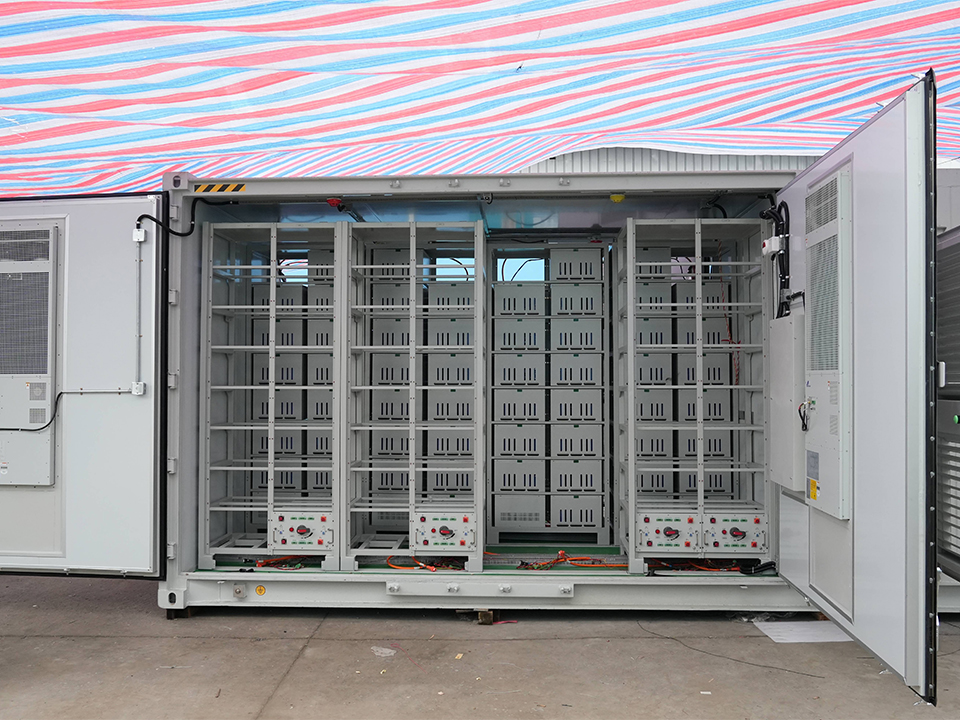
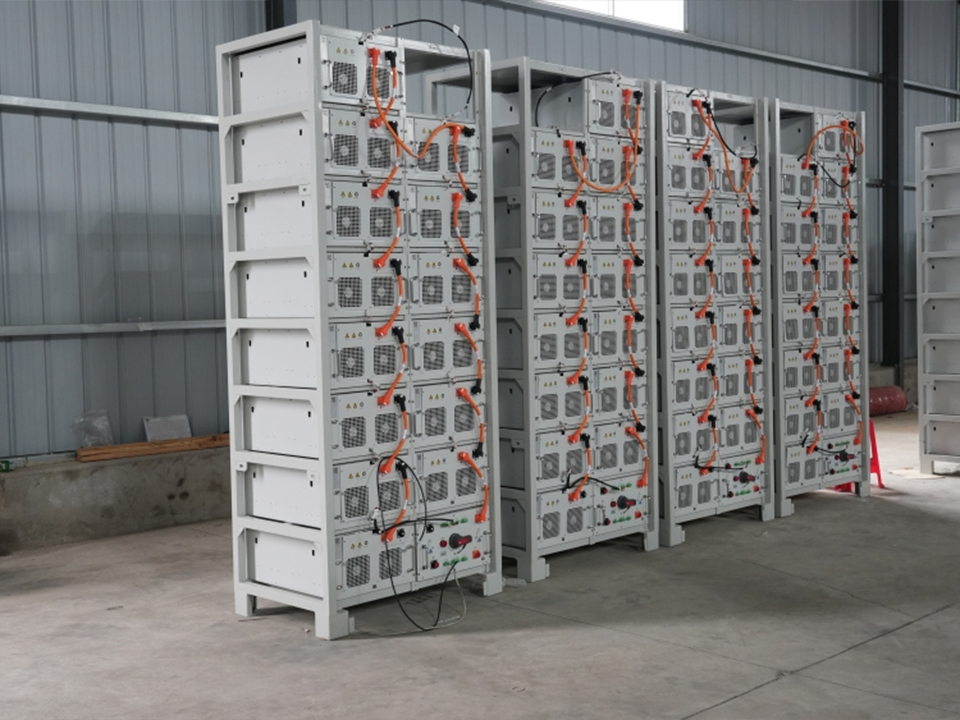
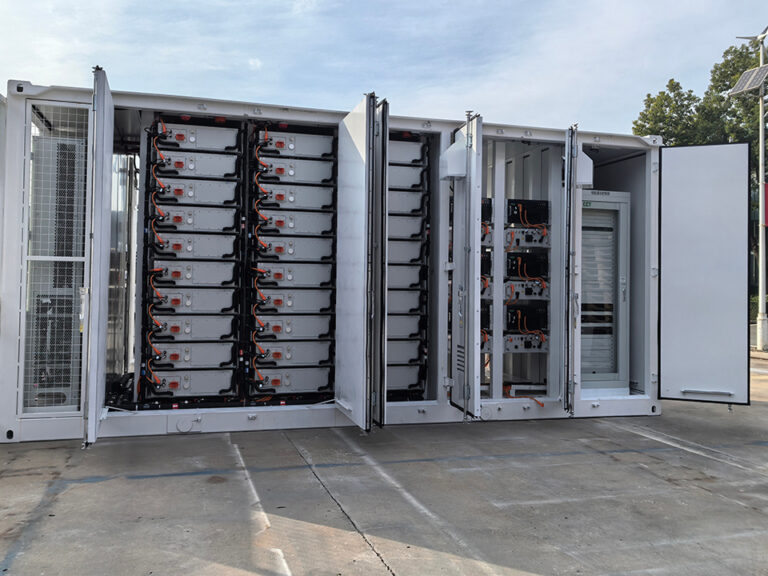
Even within cabinet systems, the treatment level ought to increase as saved power, fault existing, voltage, communication intricacy, and operational repercussion increase. A 96V 100Ah 9.6 kWh LiFePO four battery cupboard might need targeted OEM and integrator verification, while a 215kWh, 768V business battery closet warrants more stringent pre-energization controls, protection checks, interactions validation, and arrangement traceability.
Exact same chemistry. Various direct exposure.
Place Hold Details Where Failure Ends Up Being Permanent
Hold factors should be rare and challenging to bypass.
I would typically consider them at 5 shifts.
Style Freeze
The proprietor or independent designer ought to launch the design only after validating equipment ratings, single-line diagrams, defense approach, earthing, thermal style, fire approach, equipment clearances, communication architecture, and appropriate affiliation demands.
A late design remark is not quality control. It is delay using a technical badge.
Beginning of Collection Manufacturing
The battery OEM should not start unlimited series manufacturing till the accepted layout baseline, costs of materials, qualified cell source, firmware version, example evaluation plan, and first-article results are established.
Delivery should be held until manufacturing facility acceptance screening records, open-item standing, serial-number schedules, firmware standards, conservation requirements, packing evaluations, and concurred giving ins are total.
“Fix it on site” is among the most expensive sentences in BESS purchase.
Initial Energization
No battery block must be energized prior to setup completion, insulation screening, polarity verification, earthing checks, torque records, emergency-stop connection, fire-system preparedness, BMS interactions, defense setups, and pre-energization punch-list condition have actually been accepted.
Industrial Approval
Last approval must stay on hold up until contractual capacity, power, feedback time, performance, availability, controls, grid-code functions, documents, training, spares, service warranties, and unsettled issues satisfy the approval standard.
The U.S. Department of Power’s procurement material takes the same underlying placement: commercial lithium-ion BESS purchase requires a structured set of tasks, inquiries, technological specifications, and recommendation factors rather than improvised approval at the end of building.
Allocate BESS Factory Acceptance Examining by Failing Ownership
BESS manufacturing facility acceptance screening is where the OEM proves product conformity prior to logistics, installation, and schedule stress make adjustment harder.
The OEM performs the test. That does not indicate the OEM should be the only celebration seeing it.
Battery OEM Hold or Observe Points
The battery OEM should own and internally hold:
Cell and module traceability
Incoming examination documents
Busbar and link torque manages
BMS calibration
Contactor procedure
Fuse and protection-device confirmation
Temperature-sensor mapping
High-voltage interlock logic
Insulation resistance
Alarm system and trip logic
Firmware loading and revision control
End-of-line practical screening
EPC or Integrator Witness Things
The EPC ought to witness interfaces that it should later make work:
Battery-to-PCS voltage compatibility
CAN, Modbus, IEC 61850, or project-specific communications
Cost and discharge permissives
Emergency-stop habits
Start-up and shutdown sequencing
Alarm system mapping
State-of-charge and state-of-health information
Supporting supply habits
Loss-of-communications reaction
Remote-control commands
As an example, a 537.6 V high-voltage LiFePO ₄ battery closet system ought to not leave the manufacturing facility with “communications evaluated” as a single examined box. The evidence should identify protocol, register map, timeout habits, fallback state, firmware alteration, computer simulator or linked tool, examination command, observed response, and pass standard.
Proprietor and Independent Designer Witness Details
The proprietor and independent engineer must participate in just evaluates that materially affect approval, latent-defect risk, security, or warranty recuperation.
These usually include:
First-article FAT
Complete security and interlock demonstration
Representative charge-discharge cycle
BMS alarm system and trip matrix
Thermal-control failure feedback
Fire-detection interface
Emergency situation closure
Rep communication integration
Review of production quality documents
Final FAT bargain
They do not require to watch every closet repeat the exact same stable routine. Statistical tasting, document review, and monitoring are usually better.
But the very first system issues.
And the very first device after a cell, firmware, BMS, contactor, fuse, unit, or provider modification matters once more.
Make Website Approval Testing Concerning Combination, Not Repeating FAT
BESS website acceptance testing should confirm what transportation, installation, area electrical wiring, configuration, civil works, auxiliary systems, and multi-vendor integration could have changed.
It ought to not thoughtlessly duplicate the manufacturing facility script.
The website team ought to check:
Delivering damage and preservation condition
Serial-number settlement
Mechanical installment
Wire recognition and discontinuation
Torque records
Polarity
Insulation resistance
Earthing connection
Auxiliary air conditioning and DC products
Cooling and heating procedure
Fire detection and suppression interfaces
Gas, smoke, heat, or off-gas detection where defined
BMS-to-PCS communications
PCS-to-EMS and SCADA interactions
Time synchronization
Alarm directing
Local and remote emergency situation stops
Security trips
Sure states
Metering
Send off commands
Active and responsive power action
State-of-charge restrictions
Grid-loss response
Repair sequence
The utility ought to witness grid-facing features. The fire authority need to witness emergency situation accessibility, action interfaces, and any called for alarm or closure demos. The OEM needs to witness examinations that might impact warranty. The proprietor must witness legal efficiency. The EPC should exist throughout since it possesses combination.
This is where responsibility often gets obscured.
The OEM claims the shelf functions. The computer vendor states the converter works. The EMS vendor says the command was issued. The EPC claims every subcontractor passed its package test.
Yet the plant falls short to comply with a send off guideline.
That is specifically why integrated screening requires one answerable test supervisor, one accepted procedure, integrated data capture, and a plainly recognized authority that can stop the series.
Recommended Witness-Point Matrix
The complying with matrix is a strong default. It should still be adjusted for contract framework, project dimension, battery chemistry, applicable codes, grid needs, and the authority of each stakeholder.