Tell us what you need before you leave. Share your target voltage, capacity, application, order quantity, and destination market, and Brovolt will help you evaluate the right LiFePO4 battery solution.
Get a tailored recommendation, technical guidance, and a fast quotation for your OEM, residential, commercial, or industrial energy storage project. Our team is ready to support your next step today.
Lot Genealogy Requirements for Lithium Battery Procurement Guide
Lot ancestry figures out whether a lithium battery purchaser can separate faulty cells without recalling an entire task. This overview explains the records, distributor controls, audit methods, and agreement terms procurement groups ought to demand.
A distributor might offer polished IEC records, an excellent factory video clip, and a certificate plan birthing the proper version number, yet still be not able to identify which electrode roll, electrolyte set, development shelf, production shift, or cell whole lot ended up inside the battery system being priced quote.
After that what exactly are you acquiring?
That concern rests at the facility of serious lithium battery procurement. Whole lot family tree is not another top quality record to accumulate after the purchase order has actually been authorized. It is the proof chain that lets a buyer link a finished battery cupboard to its components, cells, manufacturing whole lots, procedure conditions, basic materials, evaluation records, and subsequent area performance.
Without that chain, containment comes to be uncertainty.
The tough truth is that numerous purchasers certify a battery design when they ought to be certifying both the model and the manufacturing system that repetitively constructs it. A test certification confirms that particular samples passed specific examinations on specific dates. It does not instantly show that every business delivery was made from equal materials, under comparable process controls, and even at the exact same factory.
That difference becomes costly during a thermal event, inexplicable capacity drift, uncommon direct-current internal resistance, or supplier recall.
Why Lot Ancestry Is a Purchase Control, Not a Declaring Exercise
Battery lot genealogy is the deducible partnership in between the completed system and every regulated manufacturing device listed below it. Relying on the product, the pecking order might consist of:
Energy storage system serial number
Battery cupboard serial number
Shelf or cluster identification number
Battery pack identification number
Component identification number
Cell manufacturing lot and individual cell serial number
Electrode coating roll or product batch
Electrolyte, separator, cathode, anode, and casing lots
Welding, electrolyte dental filling, formation, aging, grading, and last inspection records
The purpose is simple: when a flaw appears, the purchaser must be able to determine what is influenced, what is not influenced, and why.
A weak traceability system produces answers such as “the cells were made around March.” A defensible system recognizes the manufacturing plant, line, shift, cell great deal, electrode roll, development network, rating bin, component, cupboard, delivery, and setup place.
I would decline the initial solution.
Take into consideration a commercial system developed with 280 Ah LiFePO four cells in a 1P240S arrangement. A single cupboard includes 240 series-connected cells. A seven-rack container might consequently stand for 1,680 cell positions prior to spare stock is counted. If the vendor can not map those positions to cell-level production data, a fault discovered in one production set might compel the purchaser to quarantine even more equipment than required.
That is not a technical aggravation. It is functioning funding, lost accessibility, warranty exposure, and reputational damages.
What Full Battery Great Deal Family Tree Have To Show
A reputable battery genealogy documents must answer six questions without the supplier putting together the tale by hand after an event.
Which products were made use of?
The document needs to identify the approved expense of materials revision and the actual part whole lots consumed throughout production. For LiFePO ₄ cells, that might include lithium iron phosphate cathode material, graphite anode material, electrolyte, separator movie, existing collectors, tabs, vent assemblies, and casing elements.
Vendor names alone are insufficient. Procurement needs set identifiers.
Where was the product built?
Factory identification need to expand beyond a firm name. The data ought to reveal the legal manufacturing entity, website address, assembly line, tools group, and relevant subcontractors.
This matters due to the fact that suppliers sometimes change orders in between plants after qualification. The version number remains unchanged. The real procedure does not.
When was each production action completed?
Timestamps ought to cover cell assembly, electrolyte filling, securing, development, aging, grading, module setting up, pack assembly, software loading, final testing, and delivery release.
Chronology exposes impossible documents. A module supposedly developed before its cells finished aging is not a harmless clerical mistake; it signals either broken information controls or reconstructed documents.
Which procedure conditions used?
The ancestry document ought to link to regulated procedure information, not simply note a pass outcome. Relying on the procedure, valuable records consist of:
Welding present, pulse period, resistance, and weld head identification
Electrolyte filling up quantity and vacuum profile
Development present, voltage, temperature level, and channel
Aging duration and ambient problems
Open-circuit voltage, capacity, DCIR, self-discharge, and grading results
Insulation resistance and high-potential examination information
Torque worths for busbar and incurable links
Firmware, BMS specification, and calibration versions
Shop the raw outcome.
An eco-friendly “PASS” cell in a spreadsheet does not inform an investigator whether the worth barely passed, passed easily, was entered by hand, or was copied throughout 500 rows.
Who approved release?
Every release document should recognize the driver, assessor, quality approver, and any kind of variance authority. Digital signatures need to be linked to controlled user accounts rather than shared factory logins.
Where was the great deal delivered?
The genealogy chain ought to continue via pallet, container, costs of lading, customer site, closet placement, and appointing record. Production traceability that quits at the manufacturing facility door is just half-built.
Minimum Lithium Battery Traceability Demands
The adhering to data collection is what I would put in a significant lithium battery procurement requirements.
Traceability degree
Needed proof
Minimum acceptable information
Immediate being rejected trigger
Resources
Provider certification, incoming examination, product whole lot
Supplier, material code, lot, receipt day, evaluation result
The buyer needs to obtain this information in an organized layout such as CSV, JSON, XML, or an API export. Secured PDFs are acceptable for signed certifications, yet they are a bad key layout for hundreds of cell-level records.
Why make future examinations harder?
How to Confirm Lot Family Tree Prior To Awarding the Order
“Just how to verify lithium battery great deal family tree” need to be answered prior to business settlement reaches its last round. The correct sequence is evidence first, cost second.
Request a finished sample ancestry package
Do not accept an empty theme. Ask the distributor to offer a redacted record from a lately completed manufacturing batch of similar chemistry, ability, and system style.
The example needs to permit you to start with one finished-system identification number and trace downward to every cell great deal. Then reverse the exercise: pick one cell great deal and recognize every finished system containing it.
This is bidirectional traceability.
Run a timed traceability difficulty
Pick a serial number during the factory audit and give the provider a fixed duration to generate the associated documents. An operating manufacturing implementation system ought to obtain them swiftly.
A two-day action involving several divisions, private spreadsheets, WeChat messages, and transcribed production cards is not a traceability system. It is an archaeological dig.
Examination family tree against physical labels
Select cells, components, and shelfs on the production flooring. Contrast their physical codes with the vendor’s database.
Look for:
Reprinted tags
Duplicate serial numbers
Codes that do not match the stated manufacturing day
Tag formats that alter within one delivery
Records developed after the assessment date
Missing component settings
By hand overwritten test results
Verify software program family tree
Modern battery systems are electrochemical items controlled by software application. Purchase requirements need to therefore record BMS firmware, computer firmware, EMS variation, criterion collection, alarm limits, state-of-charge logic, stabilizing approach, and communication protocol alteration.
A hardware genealogy without a software standard can not clarify why 2 literally identical cupboards act in different ways.
Confirm information retention and possession
Contractually specify for how long records need to be preserved. Ten years might be defensible for some commercial applications; longer periods may be justified when the product carries a 15-year design life or prolonged service warranty.
The customer must also preserve access if the vendor closes, reorganizes, changes its software program supplier, or ends the business relationship.
Traceability Deepness Need To Match System Range
Traceability demands ought to increase with system complexity and fault effect.
For a 537.6 V high-voltage LiFePO4 battery cupboard, procurement must map the 1P168S cell framework to component placements, cupboard serials, BMS hardware, firmware, and last test data. The system’s 53.76 kWh × N style suggests genealogy must remain intact as cabinets are combined.
A 215kWh 768V LiFePO4 high-voltage battery closet raises the exposure. Its 1P240S arrangement utilizes 280 Ah cells, so one unidentified cell great deal can cover a meaningful block of released energy. Mapping ought to reach every cell position, not merely each shelf.
Integration adds another layer. A 100kW 215kWh all-in-one power storage system incorporates the battery with computer, EMS, BMS, cooling, fire security, and interactions. The as-built genealogy should for that reason connect the electrochemical hardware to the 100 kW PCS, control-software versions, security setups, and appointing results.
Thermal monitoring also belongs in the document. For a 241kWh 125kW liquid-cooled LiFePO4 C&I ESS closet, traceability must include coolant set, pump serial number, pressure-test outcome, leak-test information, temperature-sensor mapping, thermal interface material, and commissioning circulation confirmation.
At the megawatt-hour degree, obscurity comes to be intolerable. A 1.25 MW 2.65 MWh liquid-cooled C&I power storage space system includes 10 1P264S battery strings. Procurement groups require string-level mapping, cell-position documents, coolant-circuit family tree, defense settings, system-controller versions, and exact placement inside the container.
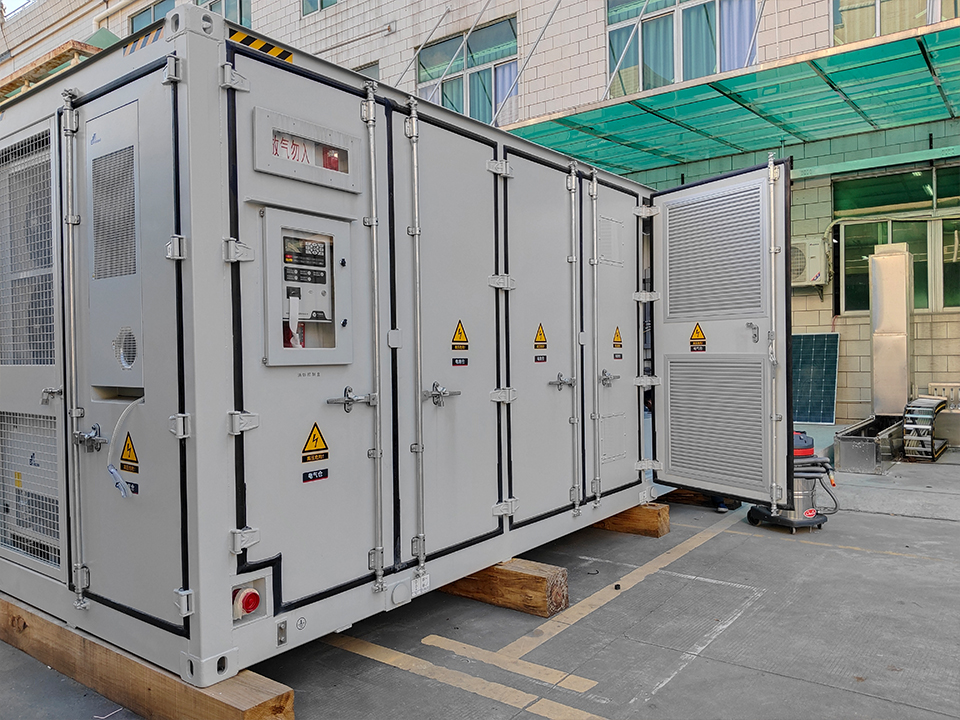
The same reasoning puts on a 500kW 1.5 MWh containerized energy storage system. A seven-string, 1P240S configuration represents 1,680 cell settings. “Cells provided by an authorized producer” is nowhere near certain sufficient for containment analysis.
A Procurement Danger Matrix for Battery Great Deal Ancestry
I advise racking up family tree capacity separately from basic supplier high quality. Otherwise, strong ratings for rates, manufacturing facility ability, and certifications can conceal weak traceability.
Risk location
Low-risk evidence
Medium-risk proof
Risky proof
Cell identity
One-of-a-kind cell serial mapped to specific component position
Cell great deal mapped to module; no private serial
Day code or brand just
Process records
Automated equipment data connected by serial
Batch-level summaries
Hand-operated pass/fail sheets
Data integrity
Role-based MES with audit route
Mixed MES and spreadsheets
Editable standalone files
Vendor changes
Formal authorization and buyer notification
Alert after application
Unrevealed replacements
Examination traceability
Raw values connected to adjusted devices
PDF examination summaries
Common design certificate
Software control
Firmware and specification versions tape-recorded per asset
Variation videotaped per delivery
No arrangement standard
Recall control
Bidirectional retrieval demonstrated
One-way lookup only
Hands-on restoration
Area mapping
System serial connected to site placement
Shipment-level mapping
No post-shipment traceability
A supplier racking up “high threat” in cell identification, process documents, or recall containment should not get a production honor merely because the sample system executes well.
Samples are chosen.
Shipments are created.
Battery Passport Compliance: Prepare for 18 February 2027
Policy (EU) 2023/1542 altered the meaning of battery documentation. From 18 February 2027, battery tickets are arranged to put on electric-vehicle batteries, light-means-of-transport batteries, and industrial batteries with capacities higher than 2 kWh. The key has to attach with a QR code to an one-of-a-kind identifier, while the accountable economic driver needs to maintain the information accurate, full, present, structured, searchable, and interoperable.
Do not confuse a battery key with a marketing websites.
A compliant information design needs regulated identifiers, access authorizations, data authentication, upgrade legal rights, lifecycle records, composition info, carbon-footprint information, efficiency info, and web links in between initial and repurposed batteries. The law also expects the key to endure the loss of the initial economic operator with suitable data plans.
The market has actually currently tested the principle. In June 2024, Volvo introduced a battery key for its EX90, created with Circulor, that traces products from the mine to the lorry. Reuters reported that the full system took more than 5 years to establish, preserves state-of-health details for 15 years, and expenses roughly US$ 10 per vehicle.
That US$ 10 figure is worthy of attention. It weakens the disagreement that traceability is inherently as well expensive. The costly part is not storing an identification number. It is cleaning years of fragmented provider data, attaching inappropriate systems, auditing upstream claims, and fixing procedures that were never ever created for item-level ancestry.
EU battery due-diligence responsibilities were initially scheduled for 18 August 2025 yet were delayed to 18 August 2027. The delay gives suppliers a lot more preparation time; it does not make traceability optional. The embraced change specifically moved the application date by 2 years.
Meanwhile, the U.S. Division of Energy reported in December 2024 that greater than US$ 150 billion had been invested in battery manufacturing, supporting greater than 100,000 tasks, with a pipe going beyond 1,100 GWh of yearly cell-manufacturing capability. Range at that degree makes regulated supplier family tree more crucial, not less.
More factories indicate even more resources, even more equipment, more production transfers, even more product alternatives, and more opportunities for nominally similar items to diverge.
Distributor Red Flags That Ought To Stop an Honor
Some solutions deserve instant suspicion.
“The cell maker does not release that details”
Particular upstream details might be commercially limited, yet discretion does not warrant the lack of internal traceability. The pack supplier need to still regulate cell identity, inbound lots, inspection data, module mapping, and delivery appropriation.
A discretion contract can take care of sensitive details. Missing records can not.
“All cells are Quality A”
“Quality A” is not a technological specification unless the distributor specifies quantifiable approval restrictions, rating methods, examination problems, tools accuracy, and rejection regulations.
Request for ability circulation, DCIR distribution, OCV spread, self-discharge limits, grading temperature level, pause, and matching criteria.
Watch the space.
“Our MES tracks every little thing”
After that demand an online presentation.
A discussion slide revealing an MES architecture shows absolutely nothing. Select a finished cabinet serial number, trace it to the cells, open the raw examination documents, recognize the assessment equipment, and review the audit log.
“The qualification covers the product”
Accreditation and genealogy fix various issues. Certification evaluates conformity versus specified needs using defined examples and procedures. Ancestry identifies which actual materials, processes, software program, and components went into a business device.
Buyers require both.
“We can provide the data after delivery”
No.
Traceability acceptance need to take place before delivery launch. As soon as repayment landmarks are finished and equipment is installed, the buyer’s utilize decreases greatly.
Best Practices for Lithium Battery Purchase Dealings
The greatest lithium battery purchase demands are written as quantifiable delivery obligations.
Include the complying with stipulations:
Special identification: Every cell, module, pack, shelf, cupboard, and container has to bring a distinct, durable identifier.
Bidirectional traceability: The distributor needs to demonstrate finished-product-to-material and material-to-finished-product access.
Approved manufacturing place: Manufacturing transfers call for composed buyer authorization.
Adjustment notice: Cell maker, chemistry, product vendor, costs of products, assembly line, firmware, process restriction, and inspection-method adjustments need previous alert.
Raw-data shipment: Test values must be delivered with serial numbers, timestamps, devices IDs, calibration standing, and acceptance limitations.
No concealed blending: Cell production great deals, capacity qualities, or product alterations might not be blended without created approval and recorded design justification.
Audit civil liberties: The buyer might examine ancestry controls, records, subcontractors, and information systems.
Retention period: Manufacturing and examination documents must remain easily accessible for the agreed service life, service warranty period, and regulatory period.
Event response: The provider must offer an affected-population analysis within a defined number of hours after alert.
Commercial treatments: Missing, irregular, or unverifiable ancestry constitutes a nonconformity and may activate shipment hold, substitute, rehabilitative activity, chargeback, or rejection.
I would certainly also connect repayment landmarks to data acceptance. 5 percent held until the full as-built family tree plan is verified can create better habits than numerous web pages of unclear top quality language.
Money makes clear top priorities.
Frequently Asked Concerns
What is battery lot family tree?
Battery great deal family tree is the recorded, auditable chain linking a completed battery system to its cells, components, element batches, basic materials, producing equipment, process problems, software variations, examinations, delivery records, and setup place, enabling buyers to separate affected properties when quality, security, service warranty, or regulative troubles appear.
In functional terms, it tells you which physical products became which finished product. It should work in both directions and must not depend on one employee by hand reconstructing the production background.
What papers should a lithium battery supplier offer?
A lithium battery distributor need to supply cell and module serial mappings, raw-material set records, incoming examination results, formation and aging data, ability and DCIR grading results, welding documents, BMS and firmware variations, final assessment data, delivery mapping, certifications of conformity, modification records, and the authorized as-built expense of materials.
Test reports such as UN 38.3, IEC 62619, UL 1973, or project-specific qualifications might support credentials, but they should not replace batch-level production evidence.
How do procurement groups confirm battery great deal ancestry?
Procurement groups verify battery whole lot family tree by picking genuine identification numbers, tracing finished systems to individual cell or material great deals, turning around the search from a suspicious great deal to every affected system, matching data source documents against physical labels, examining timestamps and raw test values, and reviewing accessibility logs for later record modifications.
The test should be performed online during distributor credentials or a manufacturing audit. An ironclad demo provides the distributor way too much chance to prepare a clean instance that may not show typical operations.
What is battery passport compliance?
Battery ticket conformity is the regulated production and upkeep of a digital document linked to a distinctively determined battery, containing needed lifecycle, composition, carbon-footprint, efficiency, sourcing, state-of-health, and ownership info in a safe and secure, interoperable, machine-readable style with specified gain access to, authentication, upgrade, and retention policies.
For covered EU batteries, the ticket requirement is scheduled from 18 February 2027. Buyers must start collecting structured family tree data prior to that day since historical records are hard to rebuild after production.
How much time should battery ancestry documents be preserved?
Battery family tree records must be preserved for the full warranty and expected running life of the system, plus any type of additional regulative, reusing, litigation, or legal period, due to the fact that safety and security issues and destruction patterns may not come to be visible until a number of years after manufacture, commissioning, possession transfer, repurposing, or assimilation right into a second-life application.
For commercial energy storage space, that may warrant a duration of 10 to two decades. The specific term must be specified in the agreement, together with data-migration and business-continuity obligations.
Is batch-level traceability enough for lithium battery procurement?
Batch-level traceability is enough only when the purchaser can prove that the batch is homogeneous, snugly controlled, and small enough to sustain appropriate control; high-value industrial systems usually require specific cell or component mapping since broad whole lot identifiers can subject numerous kilowatt-hours or numerous megawatt-hours to unnecessary quarantine.
The needed resolution must be based on danger, system dimension, replacement cost, area availability, and the supplier’s ability to isolate a defect.
Make Traceability a Business Need
The very best techniques for lithium battery purchase are not complicated in concept: determine every regulated device, maintain the raw production document, map each unit right into the last system, test access prior to shipment, and affix business effects to missing out on data.
Implementation is harder.
But buyers ought to stop accepting “industry method” as an excuse for weak battery batch tracking. Rules are moving toward one-of-a-kind identifiers, structured lifecycle info, carbon-footprint disclosure, due diligence, and battery passport compliance. Insurance firms, property owners, regulators, and private investigators will progressively ask the exact same concern after a case:
Which precise batteries are impacted?
Your supplier needs to have the ability to respond to prior to the purchase order is provided.
Call for an example genealogy plan, system power structure, cell-mapping file, change-control treatment, software program baseline, raw test export, and timed traceability presentation with every technological proposal. A supplier that can create those records is giving you proof. A vendor that can not is asking you to fund uncertainty.