Tell us what you need before you leave. Share your target voltage, capacity, application, order quantity, and destination market, and Brovolt will help you evaluate the right LiFePO4 battery solution.
Get a tailored recommendation, technical guidance, and a fast quotation for your OEM, residential, commercial, or industrial energy storage project. Our team is ready to support your next step today.
How Revenue Stacking Changes BESS Capacity and SOC Reserve Guide
Revenue stacking can improve battery economics, but each added service consumes power, energy, SOC headroom, or cycle life. This guide explains how to size the usable capacity and reserve policy that a multi-service BESS can actually deliver.
A battery may be marketed as a tidy block of megawatts and megawatt-hours, yet the moment its proprietor sells regulation, assures capability, secures back-up tons, books energy for an evening optimal, and restricts cycling under the guarantee, that obviously simple possession comes to be a disputed swimming pool of physical responsibilities.
So how much of the battery is still complimentary?
That is the question most BESS revenue-stacking models avoid. They include forecasted income from arbitrage, frequency law, ability payments, demand-charge decrease, and resilience, after that quietly assume the exact same electrons stay readily available for every single solution.
They do not.
My sight is candid: BESS revenue stacking is an allotment trouble prior to it is an income problem. The winning task is not the one with the longest listing of profits streams. It is the one whose send off controller comprehends which dedication possesses each megawatt, each megawatt-hour, and each percentage point of state of charge at every period.
Income Piling Changes the Battery Before the First Dispatch
Battery energy storage space earnings piling means using one BESS to offer numerous industrial or grid functions. A job may integrate:
Day-ahead and real-time power arbitrage
Policy up and guideline down
Spinning or running reserve
Source competence or capacity commitments
Peak shaving and demand-charge management
Renewable-energy changing
Backup power or strength
Congestion management
Distribution-network assistance
Law made this version readily feasible. FERC Order No. 841 needed local market involvement models to let electric-storage sources supply the capacity, power, and supplementary solutions they are technically capable of providing.
But market eligibility is not physical deliverability.
A 100 MW battery can not necessarily offer 100 MW of law, 100 MW of capacity, and 100 MW of peak shaving at the very same time. Nor can a 400 MWh battery discharge 400 MWh after holding emergency get, representing destruction, valuing minimum SOC, and protecting sufficient upward or downward headroom for automatic generation control.
The operating computation is more detailed to this:
Available power = Nameplate energy × state of health × allowed operating window − reserved energy − committed service energy − operating constraints
And offered power is constricted individually:
Readily available power = PCS limit − overlapping power awards − thermal derating − SOC-dependent power decrease
This distinction issues. Energy and power are related, but they are not interchangeable.
Nameplate MWh Is Not Bankable MWh
The first number in a battery proposition is generally nameplate energy. It is likewise one of the least beneficial numbers for judging stacked revenue.
I separate BESS capability right into 4 layers.
Nameplate capability
This is the nominal ranked power and power supplied by the maker: 100 MW/400 MWh, 1.25 MW/2.65 MWh, 215 kWh, or one more devices score.
It describes the mounted asset. It does not define what the driver can repeatedly market.
Physically usable capacity
Usable capacity shows:
State of health and wellness
Maximum and minimal SOC limits
Allowed depth of discharge
Cell harmonizing
Temperature level
PCS performance
Complementary usage
Charge and discharge limitations
SOC-dependent foldback
Site-level export limitations
Take into consideration a nominal 400 MWh battery operating at 92% state of wellness with a 90% dispatch window:
400 MWh × 0.92 × 0.90 = 331.2 MWh
That is already 68.8 MWh listed below nameplate before deducting back-up book, ancillary-service power, supporting demand, or anticipated conversion losses.
Readily devoted capability
Once a battery sells a service, part of its capability becomes inaccessible to competing usages.
A 30 MW regulation-up award takes in discharge power clearance. Law down consumes billing clearance. A four-hour capability commitment might need the battery to protect a much larger power block prior to the delivery period. A behind-the-meter driver might additionally need to preserve adequate energy to quit a facility’s import from crossing its payment height.
The battery is still physically existing. Readily, however, a few of it is promoted.
Bankable capacity
Bankable ability is the quantity loan providers, investors, and offtakers can fairly anticipate the BESS to deliver after making up degradation, forecast mistake, market regulations, guarantee constraints, blackouts, and solution conflicts.
This is the number I trust fund.
Every little thing else is a beginning presumption.
How Each Earnings Stream Consumes Capability Differently
Profits streams do not just create various costs. They position various cases on the battery.
Energy arbitrage consumes MWh
Arbitrage makes the spread in between billing and releasing prices, readjusted for performance, variable operating costs, deterioration, and market costs.
It requires power supply. The bigger the desired discharge block, the greater the SOC required before the high-price period.
Arbitrage likewise creates a timing problem. Discharging into a small afternoon rate spike might leave the battery empty throughout a larger night top. Billing early may fill up the battery before negative costs show up.
CAISO’s market-monitoring team described this exact intertemporal problem: short real-time optimization horizons can discharge batteries too early, leaving them with diminished SOC during peak net-load hours.
Regulation eats headroom
Policy is frequently referred to as a low-energy, high-power solution. That is just partially real.
Regulation up requires the capability to enhance net shot, which suggests the battery requires:
Unused discharge power
Energy above its minimal SOC
Enough duration to meet the marketplace commitment
Regulation down requires the opposite:
Extra charging power
Empty energy capacity listed below maximum SOC
Space to soak up AGC directions
A battery sitting at 95% SOC might be well positioned for policy up yet nearly useless for law down. At 5% SOC, the partnership turns around.
For balanced law, the commercially useful placement often relaxes the middle of the operating window. However “50% SOC” is not a global answer; expected signal prejudice, effectiveness losses, energy negotiation, period demands, and the following scheduled solution all alter the proper target.
Ability obligations take in optionality
Capability and resource-adequacy profits appear attractive due to the fact that settlements might be less dependent on daily cost spreads.
The surprise expense is shed freedom.
The driver may have to preserve power before a specified availability period, pass efficiency screening, preserve a qualifying duration, or accept non-performance fines. Energy offered earlier in the day can threaten the later capability dedication.
A 2023 NREL analysis kept in mind that capability and time-shifting can be piled without dual counting when high-price periods align with high-demand durations. The same report also cautioned that duration regulations can cap capability value: at the time of its evaluation, several U.S. markets utilized four-hour needs, meaning a six-hour battery could receive no more ability credit scores than a four-hour system under a fixed-duration structure.
That is not a factor to avoid longer period. It is a reason to stop thinking every added MWh makes equivalent value.
Peak shaving consumes assurance
Behind-the-meter BESS versions usually treat peak shaving as basic send off: release when center need climbs.
Truth is messier. The operator might not recognize the invoicing height until after it occurs. A battery released versus the wrong optimal can shed the whole month’s demand-charge advantage while also eating a cycle that can have made energy-market profits.
Peak shaving consequently requires an SOC reserve tied to fill projections, toll windows, weather, production timetables, and the likelihood that a new month-to-month top will certainly take place.
Back-up power consumes idle supply
Backup reserve might produce no daily send off profits, yet it occupies usable MWh continually.
This produces an awkward business discussion. A client may request 80% emergency situation book while the monetary version assumes aggressive daily arbitrage.
Both can not regulate the very same energy.
Select one.
Or value the conflict honestly.
State of Charge Book Is a Portfolio Decision, Not a Fixed Percentage
The most effective SOC book method is not “maintain 20% aside.” That guidance is easy to repeat and often incorrect.
SOC reserve ought to be separated into unique operating bands:
Physical lower book: Shields cells, maintains BMS security, and avoids low-SOC power reduction.
Physical top get: Maintains charging clearance and lowers prolonged direct exposure to extremely high SOC.
Market get: Supports committed regulation, ability, or operating-reserve awards.
Commercial book: Secures peak-shaving, backup, or legal shipment commitments.
Forecast-error barrier: Covers sustainable, load, cost, and AGC uncertainty.
Contingency reserve: Permits healing from missed out on charging intervals, derating, or communication failure.
Both basic headroom calculations are simple:
Upward power clearance = Present SOC energy − minimum allowed power
Down energy headroom = maximum allowed energy − current SOC energy
But the operating decision is not straightforward since both worths adjustment after every dispatch direction.
I use a vibrant book matrix rather than one fixed SOC flooring. The matrix appoints minimal SOC, maximum SOC, needed power clearance, and continuing to be cycle spending plan by hour and service.
For instance:
Overnight: maintain charging clearance for reduced or adverse rates.
Morning load ramp: preserve energy for peak shaving.
Lunchtime solar surplus: create space for charging and law down.
Evening net-load top: prioritize discharge energy and regulation up.
Tornado or interruption watch: raise the back-up book.
High-temperature period: lower power dedications for thermal derating.
This is battery SOC management as a control policy, not a percentage published in a feasibility research study.
What the 2023– 2024 Evidence Really Shows
The united state market grew swiftly. In the very first seven months of 2024, drivers added 5 GW of utility-scale battery capability, taking offered united state capacity over 20.7 GW by July. Most systems utilized lithium-ion chemistry.
The previous year had actually already been aggressive: 6.4 GW of new battery ability was added in 2023, a 70% yearly boost. Early 2024 strategies required another 14.3 GW, with Texas and The golden state anticipated to stand for 82% of those additions.
Extra batteries, though, do not assure higher income per set up kilowatt.
CAISO’s 2023 battery report discovered that total battery income climbed as the fleet expanded, but capacity-weighted internet market revenue fell from roughly $103/kW-year in 2022 to $78/kW-year in 2023. Concerning 62% of 2023 web earnings originated from power, while actual net power profits fell to roughly $50/kW-year, down from $58/kW-year in 2022.
That is the saturation story lots of sales decks leave out.
As ancillary-service supply enhanced, supplementary solutions relocated from inhabiting the majority of batteries’ proposal capacity in 2019 to a relatively small share by 2023. Batteries offered many times more guideline than the market required, putting descending pressure on the shortage value of that service.
The SOC problem additionally became a market-design issue. In November 2023, CAISO presented a restraint utilizing regulation-up and regulation-down “attenuation factors” to estimate how AGC implementation changes battery SOC. Those elements are updated quarterly to show seasonal policy use.
The outcome was operationally significant. CAISO reported less undeliverable ancillary-service timetables and 25% fewer rescinded ancillary-service payments in 2023 than in 2022, also as batteries supplied a bigger share of the marketplace’s supplementary services.
Yet an additional number is entitled to interest: batteries received almost $28 million in bid-cost-recovery settlements during 2023, roughly 10% of all such repayments in CAISO. The market monitor linked many of these payments to SOC restraints and dispatch results that existing negotiation regulations did not manage easily.
My analysis is not courteous: a huge profits stack can conceal dispatch inadequacy. Gross earnings may rise while profits per kilowatt drops, settlement intricacy expands, and operational flexibility diminishes.
Earnings Stack Capacity and SOC Comparison
The varieties listed below are crafting starting factors, not tariff demands. Real setups should mirror the marketplace item, chemistry, warranty, PCS controls, duration obligation, forecast high quality, and website agreement.
Profits stream
Main ability consumed
Illustratory SOC setting
Cycle impact
Common problem
Power arbitrage
Discharge MWh and charging capacity
Dynamic, typically 15%– 90%
Moderate to high
Can empty the battery before capability or optimal occasions
Policy up
Release MW and reduced SOC clearance
Commonly 45%– 80%
Reduced to moderate, signal-dependent
Competes with evening discharge and backup reserve
Regulation down
Fee MW and top SOC headroom
Generally 20%– 55%
Low to moderate, signal-dependent
Competes with solar billing and negative-price capture
Balanced guideline
Charging and releasing MW
Often near the middle of the usable home window
Modest throughput
Leaves less power for arbitrage or optimal shaving
Spinning book
Release MW and deliverable power
Over service-specific minimum
Usually low till called
Capability is scheduled even when no dispatch occurs
Capacity/resource competence
Company MW plus called for duration
High prior to responsibility window
Event-dependent
Earlier arbitrage can develop non-performance exposure
Peak shaving
Site-discharge MW and anticipated MWh
Load-forecast dependent
Moderate
Wrong optimal prediction wastes power and cycles
Backup/resilience
Reserved MWh
Contract-dependent, typically high
Low throughout normal procedure
Idle reserve subdues everyday seller profits
Renewable shifting
Charging space plus later discharge MWh
Low prior to generation, high before delivery
Modest to high
Disputes with policy down during billing hours
The greatest stack typically incorporates solutions with different timing and ability needs.
Capability plus night arbitrage can straighten. Policy down plus midday solar billing may not. Backup book plus aggressive arbitrage hardly ever aligns unless the book requirement is vibrant or an additional energy block is mounted.
This is where BESS ability optimization earns its name.
Match the Hardware to the Income Heap
Income method must influence devices choice. Beginning with a battery cabinet and designing an income pile later is in reverse.
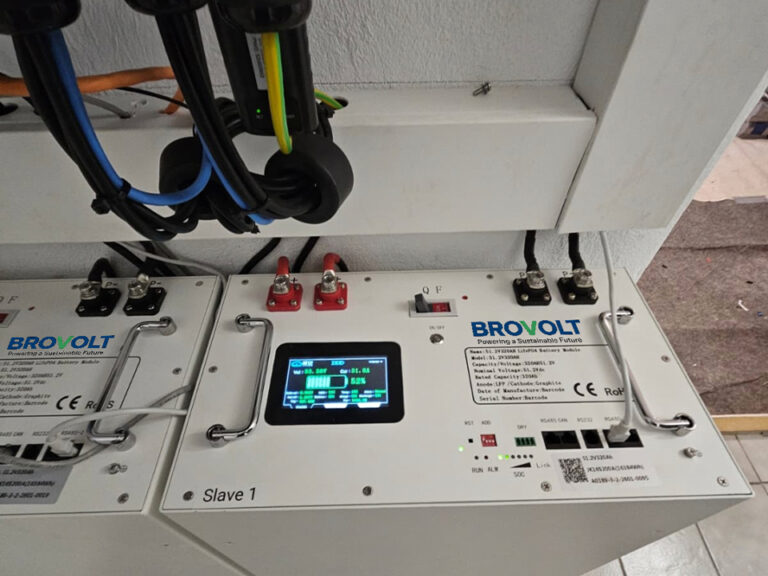
For tiny industrial, project-specific, or assimilation job, a 96 V 200 Ah 19.2 kWh LiFePO4 rack-mounted battery cupboard uses a 19.2 kWh small block with RS485/CAN interactions. Its item information provides a 95% maximum depth of discharge, approximately 200 An optimum charge and discharge existing, and an indoor IP20 enclosure. Those information establish just how much genuine SOC book and power headroom the controller can reveal.
The 192 V 200 Ah 38.2 kWh high-voltage LiFePO4 cupboard doubles the small power block while retaining a 200 Ah architecture, LCD interface, and RS485/CAN integration. It can support bigger solar-storage or backup setups, however stacking still relies on inverter power, communications latency, thermal efficiency, and the last functional SOC home window– not merely 38.2 kWh on the tag.
For modular high-voltage jobs, the BCB540 537.6 V high-voltage LiFePO4 battery closet system is specified around 53.76 kWh components, a 1P168S setup, forced-air air conditioning, 90% depth of discharge, and a maximum 1C discharge price. That greater power capability might match fast-response services, yet the controller should still reserve charging and releasing area for the desired pile.
A 215 kWh 768 V LiFePO4 high-voltage battery cupboard changes the design toward commercial energy applications. The noted 215 kWh small power, 90% depth of discharge, 1P240S setup, and optimum 0.5 C discharge rate suggest an even more energy-oriented obligation account than a little, high-C-rate guideline asset.
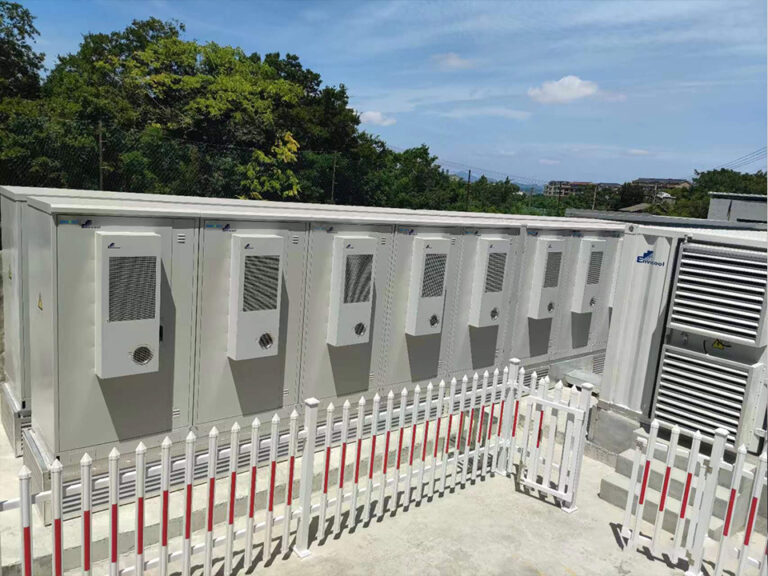
At container scale, the 1.25 MW/2.65 MWh liquid-cooled C&I energy-storage system has a small power-to-energy period of about 2.12 hours. The BC2650 requirements listings LiFePO four chemistry, 90% depth of discharge, fluid air conditioning, an 844.8 V small DC bus, and multi-protocol communications. That arrangement may sustain peak shaving, solar moving, back-up, and picked market solutions, yet a complete four-hour capability obligation would certainly require extra power ability or a reduced fully commited MW level.
Hardware adheres to duty.
Constantly.
Exactly how to Develop the Best SOC Reserve Approach for BESS
I would certainly not approve a stacked-revenue design till it answers these eight inquiries.
1. Which solution has send off priority?
The EMS needs an explicit power structure.
A common order could be:
Security and battery limits
Contractual backup book
Ability or resource-adequacy commitment
Awarded supplementary solutions
Demand-charge security
Energy arbitrage
Opportunistic billing
Your order might differ. What issues is that it exists prior to 2 services request the exact same MW.
2. Is ability booked in MW, MWh, or both?
Law honors are frequently power-heavy. Ability items may be both power- and duration-heavy. Back-up is mainly energy-heavy until an interruption occurs.
Model both measurements individually.
3. What happens after an unforeseen send off?
An income model must imitate recuperation, not simply activation.
After regulation-up implementation or an ability event:
Just how swiftly can the battery recharge?
At what power rate?
Is grid billing allowed?
Will charging produce a brand-new website height?
Does recharge conflict with one more honor?
Exists sufficient time before the next obligation?
4. Is degradation charged to the solution triggering it?
Do not spread out destruction costs equally throughout every revenue stream.
A deep arbitrage cycle, shallow guideline activity, backup get, and extra capacity commitment do not take in life similarly. Associate equivalent complete cycles, calendar ageing, high-SOC direct exposure, thermal stress and anxiety, and power-related wear to the dispatch that caused them.
Or else weak income streams will be subsidized by stronger ones.
5. Does the forecast consist of market saturation?
CAISO’s decrease from $103/kW-year to $78/kW-year is a warning. Fast-growing battery fleets can overwhelm fairly superficial ancillary-service needs.
Use decreasing cost situations. Assume rivals arrive. Stress-test the pile with ancillary-service revenue reduced by 25%, 50%, and 75%.
The unpleasant situation is commonly the beneficial one.
6. Are SOC limits vibrant?
A fixed SOC floor may be adequate for a basic backup possession. It is crude for a market-facing BESS.
Establish time-varying reduced and upper bounds based upon:
Forecast rate spreads
Expected AGC power
Ability home windows
Renewable result
Site load
Weather
Failure threat
Thermal derating
Continuing to be day-to-day cycle allowance
7. Is the send off feasible under degraded problems?
Run the model at:
Beginning of life
Mid-life
Warranty end
High ambient temperature level
Partial PCS blackout
Minimized component availability
Communication failing
Projection error
Missed out on billing period
A job that only works at 100% state of health is not a job. It is a spread sheet.
8. Can the operator discuss every reserved MWh?
Every book needs to have a proprietor:
Guarantee get
Grid-service book
Client backup get
Forecast barrier
Thermal get
Contingency book
Unassigned reserve is wasted ability. Double-assigned book is operational threat.
Income Piling Failure Settings No One Suches As to Talk About
Double-counted capability
The financial design designates the exact same 20 MW to guideline and optimal shaving due to the fact that historical activations did not overlap.
Eventually, they will.
Phantom SOC
The day-ahead routine thinks an SOC degree that real-time regulation release, performance losses, or an earlier dispatch has actually currently altered.
Perfect-forecast economics
The model recognizes tomorrow’s peak price, facility tons, solar production, and policy prejudice.
The driver will certainly not.
Free degradation
The version treats cycling as costless until the service warranty restriction unexpectedly appears in year 7.
Fixed duration assumptions
A two-hour system is credited as if it can meet a four-hour commitment, or a four-hour system is presumed to gain proportionally much more ability revenue than the relevant accreditation technique permits.
Revenue without healing
The model counts settlement for an event but neglects the price and time called for to recover SOC later.
Merchant profits treated as acquired revenue
An unpredictable, saturating ancillary-service market is presented to financiers as if it were a fixed settlement.
That is not hostile forecasting. It is classification error.
Often Asked Inquiries
What is BESS earnings stacking?
BESS earnings piling is the coordinated use one battery energy storage space system to make income from multiple services– such as power arbitrage, regularity law, capacity, top shaving, and back-up– while respecting common power limitations, usable energy, state-of-charge borders, degradation costs, and market-delivery obligations.
The services need to be co-optimized because they compete for the same PCS ability, kept energy, SOC clearance, and cycle allowance. A legitimate pile models simultaneous commitments and recuperation durations rather than simply including independent earnings projections.
Exactly how does earnings piling affect BESS capability?
Revenue piling influences BESS ability by converting component of the battery’s nameplate power and energy into devoted ability that can not be freely dispatched in other places; every ancillary-service honor, capacity obligation, backup book, thermal limit, and SOC floor lowers the staying clearance readily available for arbitrage or an additional service.
The impact needs to be computed individually for MW and MWh. Some services reserve power yet utilize little energy, while capability, back-up, renewable changing, and optimal shaving can lock up substantial energy stock.
What is the very best SOC get strategy for BESS?
The most effective SOC book technique is a dynamic, time-dependent operating plan that protects enough billing and releasing clearance for gotten services, projection mistake, battery security, and recuperation while releasing unused ability for the highest-value send off chance throughout each market period.
A fixed 20% floor might be as well traditional throughout low-risk durations and dangerously low prior to a capability occasion. The EMS needs to change top and lower SOC restricts according to rate, lots, renewable generation, climate, and solution commitments.
Can a battery give arbitrage and ancillary services all at once?
A battery can offer arbitrage and ancillary solutions all at once when its power rating, readily available power, SOC headroom, market policies, interactions, and send off controller leave sufficient deliverable capacity for both solutions without double-counting the same megawatts or breaking period and efficiency requirements.
The mix works best when the solutions occupy different amount of time or complementary SOC positions. It fails when an arbitrage discharge removes power needed for law up, book, or a later capacity responsibility.
Does revenue stacking constantly enhance BESS revenues?
Income stacking does not constantly enhance BESS earnings since extra services might minimize arbitrage flexibility, call for bigger SOC books, rise deterioration, create non-performance direct exposure, make complex negotiations, or enter markets where growing battery involvement has actually already pressed ancillary-service prices and revenue per set up kilowatt.
Each solution ought to be reviewed on incremental web margin, not gross income. Deduct charging expenses, efficiency losses, deterioration, book chance cost, charges, software costs, market costs, and post-event SOC recuperation.
Develop a Profits Pile the Battery Can Really Deliver
Do not start with 5 projected earnings lines.
Begin with the battery’s genuine operating envelope: MW, useful MWh, SOC restrictions, state of health and wellness, C-rate, air conditioning, computer constraints, guarantee terms, communication methods, site lots, market rules, and contractual concerns.
Then allocate capability.
After that simulate conflicts.
Then rate profits.
A qualified BESS Revenue Stacking strategy must show precisely how much power and power continue to be available after every book, honor, and operational limitation. Contrast the 19.2 kWh, 38.2 kWh, 53.76 kWh modular, 215 kWh cupboard, and 2.65 MWh container systems versus the intended duty cycle– and request a configuration constructed around deliverable earnings, not sales brochure capacity.