Tell us what you need before you leave. Share your target voltage, capacity, application, order quantity, and destination market, and Brovolt will help you evaluate the right LiFePO4 battery solution.
Get a tailored recommendation, technical guidance, and a fast quotation for your OEM, residential, commercial, or industrial energy storage project. Our team is ready to support your next step today.
Passive vs Active Balancing: Which BMS Strategy Fits the Pack?
Passive balancing is affordable and dependable, however its reduced current can turn little state-of-charge differences into multi-day adjustment cycles. Active balancing steps power instead of melting it, yet the added hardware only repays when pack capacity, operating problems, and solution economics validate it.
Even when a battery pack leaves the assembly line with very closely matched cells, manufacturing resistances, temperature gradients, wiring resistance, self-discharge distinctions, and irregular aging progressively draw individual cells far from the exact same state of cost.
So which cell gets to make a decision how much power the entire pack can utilize?
Normally, the weakest one.
That is the uneasy fact behind BMS cell balancing. A battery pack may contain plenty of kept power, but charging have to stop when the initial cell reaches its upper limit, and discharging has to stop when the initial cell reaches its reduced limit. The pack is just as useful as its earliest-limiting cell. A 2024 Scientific Reports research study defined this same pack-level restraint: without reliable harmonizing, the weakest cell restricts functional ability even when the continuing to be cells still have power readily available.
My blunt sight is this: passive harmonizing fits more battery packs than active-balancer advertising and marketing recommends, while active harmonizing fits a lot more high-capacity systems than inexpensive BMS suppliers confess.
The correct BMS balancing strategy depends upon 5 things: imbalance measured in amp-hours, offered balancing time, thermal headroom, expected cell aging, and the financial cost of unused capability or field service.
Not the sales brochure.
Exactly How Does BMS Cell Harmonizing Work?
BMS cell harmonizing minimizes distinctions between series-connected cells to ensure that their voltage or state of cost converges within an acceptable variety.
There are two major battery cell harmonizing approaches.
Passive cell balancing links a resistor across cells with greater voltage or state of charge. Excess electrical energy is exchanged warmth up until the lower cells capture up.
Current cell balancing transfers power from higher-charge cells to lower-charge cells, from cells to the pack, from the pack to cells, or in between battery components. Depending upon the architecture, it may utilize inductors, capacitors, transformers, flyback converters, buck-boost converters, or separated DC-DC stages.
Basic enough?
Not actually. The circuit geography is just half the system. The BMS must still decide:
When harmonizing begins
Which cells are selected
Whether balancing operates during charging, discharging, or rest
Just how voltage, state of charge, and temperature influence the choice
How much current can flow without overheating the PCB
What occurs when a balancing button or sensor stops working
A mediocre formula attached to advanced equipment continues to be a sub-par balancer.
The Balancing-Time Computation Vendors Rarely Show
Presume a cell has a 5Ah state-of-charge excess.
With a 100mA passive balancing present:
Balancing time = 5Ah ÷ 0.1 A = 50 hours
That is the theoretical minimum. Obligation biking, temperature limits, charger behavior, and balancing limits might extend the genuine adjustment time even more.
At a 3.45 V cell voltage, a 100mA bleed path dissipates roughly:
3.45 V × 0.1 A = 0.345 W per balancing cell
4 networks running together would certainly generate concerning 1.38 W of local warm before making up button losses or neighboring elements.
Currently contrast that with a theoretical 1A active balancer:
Balancing time = 5Ah ÷ 1A = 5 hours
Active balancing will likewise incur conversion losses and control constraints, yet the order-of-magnitude difference stays.
The genuine inquiry is not whether easy balancing jobs. It does.
The concern is whether the pack stays in a suitable harmonizing state enough time for easy harmonizing to finish the task.
Passive Cell Balancing: Cheap, Proven, and Regularly Misjudged
Easy balancing has a picture problem. It is typically described as the primitive choice, as though every major battery pack should eventually finish to active balancing.
I disagree.
Passive balancing can be the appropriate design choice when:
Cell matching is limited
The pack operates in a controlled temperature level array
Imbalance develops gradually
Full-charge dwell time is available
The balancing current is correctly sized
Price, simpleness, and lasting dependability issue greater than recovering a small amount of energy
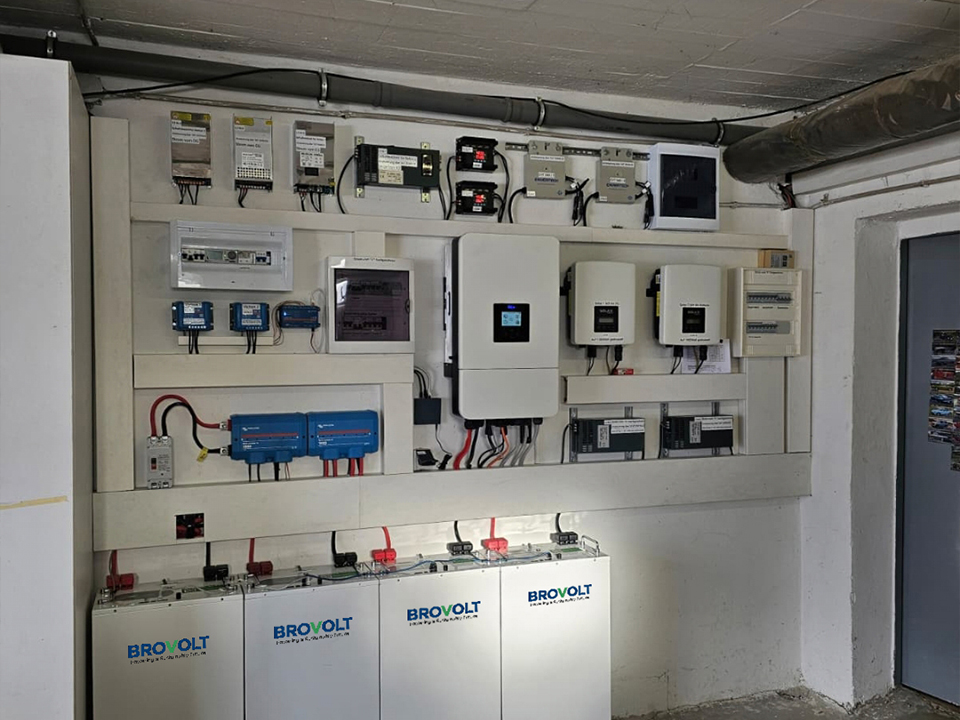
Think about a 5.12 kWh 51.2 V 100Ah LiFePO4 wall-mounted battery. Its published requirements listing 100Ah capacity, 100A optimum cost and discharge existing, greater than 6,000 cycles under stated examination problems, and a small energy score of 5.12 kWh.
A 1% state-of-charge mismatch in a 100Ah pack equates to around 1Ah. At 100mA, correcting that mismatch theoretically takes 10 hours.
That may be perfectly appropriate for a property battery that routinely gets to the upper charging region and stays linked overnight. It might be unacceptable in an off-grid system that cycles off-and-on and rarely continues to be complete.
Context success.
The hard truth is that passive balancing is not inherently weak. Undersized passive harmonizing is weak.
A buyer should require six numbers from the BMS vendor:
BMS specification
Why it matters
Maximum stabilizing present
Determines the amount of amp-hours can be remedied per hour
Balancing start voltage
Exposes whether balancing is restricted to the top fee region
Voltage or SoC trigger difference
Establishes how early the BMS reacts
Synchronised harmonizing channels
Controls overall warmth and modification speed
Thermal derating actions
Shows whether marketed existing survives real unit temperature levels
Sustained operating states
Confirms whether balancing runs during fee, discharge, rest, or only one problem
A BMS marketed merely as having “cell balancing” informs us practically nothing.
Active Cell Harmonizing: Faster Modification, Extra Ways to Fail
Active cell harmonizing attempts to protect power by moving it instead of dissipating it.
That appears remarkable. Electrically, it typically is.
Commercially and operationally? The response gets messier.
Energetic balancing includes power buttons, magnetic parts, gate motorists, sensing circuits, control reasoning, PCB area, electromagnetic-interference problems, diagnostic needs, and extra failure modes. Transformer- and converter-based systems might also require seclusion administration and even more demanding validation.
More parts. Much more concerns.
However active stabilizing ends up being persuasive when the pack is big sufficient that a little percent inequality stands for several amp-hours.
At 100mA, modification would call for 62.8 academic hours.
Currently energetic balancing starts to look much less like premium hardware and even more like capability administration.
Still, I would not accept it from words “energetic balancing” alone. I would desire the topology, transfer present, conversion effectiveness under sensible voltage differences, running temperature, still usage, mistake reaction, and long-lasting part tension.
Anything less is sales copy.
Active vs Passive Harmonizing: Straight Comparison
Aspect
Passive Cell Balancing
Current Cell Balancing
Power managing
Dissipates excess fee as warmth
Transfers energy in between cells, components, or pack
Circuit complexity
Low
Medium to very high
Element count
Reduced
Greater
Normal engineering cost
Reduced
Greater
Thermal lots
Concentrated around bleed resistors
Reduced dissipation in concept, however converter losses continue to be
Stabilizing speed
Minimal by bleed current and readily available dwell time
Can support significantly greater transfer present
Ideal operating problem
Loads with little, predictable inequality
Packs with larger or persisting inequality
Viability for large-capacity cells
Depends heavily on balancing current
Typically stronger as amp-hour inequality increases
EMI direct exposure
Low
Higher because of switching over converters
Analysis worry
Fairly straightforward
Much more requiring
Failure-mode count
Reduced
Greater
Energy recovery
No
Partial; never ever completely lossless
Finest fit
Cost-sensitive, well-matched fixed packs
High-capacity, high-uptime, irregularly cycled, or maturing packs
Easy harmonizing is less complicated to verify.
Energetic balancing is simpler to oversell.
What the 2024 Research Really Reveals
Recent research supports the performance potential of active harmonizing, however laboratory numbers have to not be confused with ensured field efficiency.
A Scientific News paper released on August 10, 2024 evaluated a crossbreed duty-cycle and cell-to-pack energetic harmonizing approach. In a 96-cell simulation, the suggested geography got to equalization in 6.0 hours compared to 9.2 hours for the traditional comparison method. A separate four-cell hardware experiment assembled in about 400 secs from a first 2.2% state-of-charge distinction.
That is meaningful.
However it does not inform us the ten-year failing price, production expense, performed discharges, transformer aging, or repair service concern inside a residential energy-storage closet.
One more Scientific Reports study, released on November 20, 2024, assessed multi-inductor energetic stabilizing for a 52V battery system. Its two-layer topology balanced the examination cells in 54 secs in simulation and 65 seconds using hardware-in-the-loop screening. The paper reported 99.974% efficiency for the two-layer layout, while a slower single-layer design reached approximately 99.993%.
Outstanding numbers. Narrow conditions.
High converter performance throughout a regulated harmonizing experiment does not instantly equivalent high whole-pack effectiveness across temperature level swings, reduced voltage differences, standby procedure, part resistances, and years of biking.
A Purdue College thesis posted on June 21, 2024 took a look at an active balancing style for a LiFePO4 storage component using an LT8584 flyback-based balancer. The job was inspired by changing a by hand done easy procedure and potentially restoring damaged components rather than changing them.
That situation discloses where active harmonizing may create its toughest return: not with tiny power financial savings, but through lowered service work and recovered components.
A May 2024 optimization research study reported a 3.2% boost in battery-system operational time utilizing active balancing under its experimental framework. The job was sent as a preprint, so I would certainly treat the percentage as evidence of technical potential rather than a bankable business result.
This distinction issues. A lot.
Suit the BMS Strategy to Capacity, Cycling, and Solution Expense
The most effective cell balancing method for battery packs can be approximated with a standard partnership:
Required balancing present = Anticipated inequality in Ah ÷ Available harmonizing time
Suppose a 200Ah battery creates a reoccuring 2% distinction.
The imbalance is:
200Ah × 0.02 = 4Ah
To fix it within eight hours, the BMS requires an average reliable stabilizing current of:
4Ah ÷ 8h = 0.5 A
A 100mA passive balancer can not satisfy that requirement. It would require a minimum of 40 academic hours.
This does not mean every 200Ah pack needs active balancing. It means the inequality assumptions, running window, and chosen balancing current have to agree mathematically.
Its item web page does not mention the stabilizing geography or balancing existing. That noninclusion is common, but it leaves significant customers incapable to determine adjustment time.
The same problem comes to be more important at higher capabilities. The 51.2 V 460Ah movable floor-standing solar battery is ranked at around 23.55 kWh with a built-in BMS and optimal 200A fee and discharge current.
At 460Ah:
A 0.5% distinction equals 2.3 Ah
A 1% distinction equates to 4.6 Ah
A 2% distinction equals 9.2 Ah
A 100mA bleed current would in theory require 23, 46, or 92 hours respectively.
That is the evaluation purchase groups ought to do before reviewing active versus passive balancing.
Not after appointing.
My Pack-Level Recommendation
For a well-matched 100Ah household LiFePO4 pack operating in a stable setting, I would usually begin with properly engineered passive balancing. It is easier, simpler to validate, and may have sufficient time to correct little differences.
For 200Ah to 314Ah systems, the response depends on biking behavior. Easy balancing might still be sufficient when imbalance remains little and the pack on a regular basis reaches the harmonizing area. Yet the actual harmonizing current needs to be revealed.
For 400Ah to 628Ah packs, I would certainly put even more weight on amp-hour adjustment speed, thermal slopes, service gain access to, and aging habits. At these abilities, a percent that looks trivial on a control panel can represent several amp-hours and days of low-current adjustment.
Energetic stabilizing gains its expense when it solves a determined operational problem.
Or else, it is pricey decoration.
The BMS Technique Issues Much Less Than the Validation Technique
Right here is an opinion some vendors will dislike: the passive-versus-active argument is commonly a disturbance from weaker engineering somewhere else.
A high-quality passive BMS with accurate picking up, matched cells, excellent busbar design, controlled temperature levels, deducible calibration, robust firmware, and reasonable fault handling can outmatch a badly validated energetic system.
And an active balancer can not fix:
A damaged cell
Serious internal-resistance growth
A bad weld
A loosened busbar
Unequal air conditioning
Incorrect state-of-charge estimate
Poor cell grading
Inadequate overvoltage defense
Stabilizing redistributes or gets rid of fee. It does not turn around electrochemical aging.
The 2024 Scientific News deal with functional battery-pack obstacles located that differences in cell degradation can compel pack-level replacement choices even when various other cells preserve better life. The authors emphasized screening, state-of-health estimation, and uniform deterioration– not balancing alone.
So I would examine the total battery monitoring system, not one feature.
Concerns to Ask Prior To Picking a BMS Balancing Method
Question for the supplier
Weak solution
Valuable response
What is the stabilizing geography?
“Smart harmonizing”
Resistor bleed, switched capacitor, inductor, flyback, cell-to-pack, or one more named design
What is the efficient stabilizing existing?
“As much as 2A”
Current versus cell voltage, temperature, obligation cycle, and number of energetic networks
When does harmonizing run?
“Immediately”
Precise cost, discharge, remainder, voltage, SoC, and temperature problems
What causes balancing?
“Cell difference”
Limit, hysteresis, perseverance time, and stop condition
How is warmth managed?
“BMS safeguarded”
Resistor rating, PCB temperature level limit, sensor place, and derating curve
Can stabilizing mistakes be identified?
“Yes”
Logged fault codes for open resistor, fell short MOSFET, converter mistake, sensor drift, or timeout
Just how is SoC computed?
“Software application formula”
Coulomb checking, voltage version, Kalman filtering system, calibration procedure, and drift correction
What occurs after cell replacement?
“Restart the system”
Recommissioning, capacity matching, SoC alignment, and recalibration treatment
Is parallel-pack balancing coordinated?
“Sustains parallel usage”
Master-slave logic, interaction protocol, present sharing, and pack-level security behavior
Is area information readily available?
“Evaluated extensively”
Temperature logs, discrepancy fads, stabilizing hours, failure documents, and service history
That last row divides engineering evidence from self-confidence movie theater.
Regularly Asked Inquiries
Is energetic balancing constantly much better than passive balancing?
Active harmonizing is not immediately better; it is the stronger selection just when the value of recuperated capability, faster equalization, lower warmth, or reduced service job exceeds the included expense, control complexity, electromagnetic-noise danger, and added component failing settings introduced by the energy-transfer circuit.
For little, closely matched residential packs, passive balancing may provide the most effective reliability-to-cost ratio. For high-capacity cells, second-life components, irregular billing accounts, or systems where downtime is expensive, energetic harmonizing might generate a more powerful lifetime return.
Exactly how does BMS cell balancing operate in LiFePO4 batteries?
BMS cell harmonizing in a LiFePO4 pack is the regulated equalization of cell state of cost, accomplished either by bleeding energy from higher cells via resistors or by transferring power in between cells, modules, or the full pack to ensure that one early-limit cell does not dictate the useful capability.
The BMS checks cell voltage, current, temperature, and often approximated state of cost. It activates stabilizing according to configured thresholds and quits when the cell distinction gets in an acceptable band or another safety and security condition takes top priority.
What is the most effective cell balancing method for a home battery pack?
The very best cell harmonizing approach for a home battery pack is generally easy balancing for well-matched, thermally consistent, modest-capacity systems with regular full-charge opportunities, while energetic stabilizing ends up being more appealing as capacity, imbalance in amp-hours, uptime worth, biking variability, or the expense of field solution boosts.
Pack ability alone should not make the decision. Buyers must compute the anticipated amp-hour mismatch and compare it with the BMS balancing present and the number of hours throughout which balancing can actually run.
Just how much balancing current does a BMS need?
A BMS needs sufficient stabilizing current to deal with the optimum anticipated amp-hour mismatch inside the readily available balancing home window, calculated approximately as required current equates to capability increased by state-of-charge spread separated by balancing hours, with added margin for responsibility cycle, thermal derating, conversion losses, and limited operating states.
For example, remedying a 2% difference in a 200Ah pack indicates taking care of around 4Ah. Completing that modification within eight hours requires an average effective current near 0.5 A, not just a brief promoted height of 0.5 A.
Can cell balancing repair service an abject battery cell?
Cell harmonizing can not repair an abject cell; it can only remove or rearrange fee to ensure that cells reach even more comparable voltage or state-of-charge levels, while irreversible capability loss, increased inner resistance, lithium plating, separator damage, contamination, and various other aging devices remain inside the affected cell.
A cell that repetitively diverges after balancing should be explored for temperature level direct exposure, connection resistance, dimension error, self-discharge, or real state-of-health loss. Consistently covering up the trouble with harmonizing can postpone medical diagnosis rather than address it.
Choose the Balancer Before the Pack Chooses for You
Do not ask a vendor whether the BMS has balancing.
Ask the number of amp-hours it can correct overnight. Ask where the warmth goes. Ask whether the promoted current is continuous, temperature-derated, or available to just one network at once. Ask whether harmonizing operates when the battery is actually made use of, not simply under a laboratory charging condition.
And demand the information.
For property systems varying from 5.12 kWh to greater than 30kWh, the appropriate BMS strategy should be based upon cell capability, expected SoC spread, cycling pattern, thermal layout, service design, and measurable improvement time.
Easy balancing is not instantly economical design.
Active harmonizing is not immediately sophisticated engineering.
The better system is the one whose numbers make it through the pack.