Tell us what you need before you leave. Share your target voltage, capacity, application, order quantity, and destination market, and Brovolt will help you evaluate the right LiFePO4 battery solution.
Get a tailored recommendation, technical guidance, and a fast quotation for your OEM, residential, commercial, or industrial energy storage project. Our team is ready to support your next step today.
How to Estimate Peak-Shaving Savings for a Commercial BESS Guide
This guide discusses exactly how to estimate business BESS peak-shaving savings without counting on filled with air vendor presumptions. It includes a practical calculator structure, a functioned instance, battery-sizing solutions, common modeling errors, and an ROI checklist.
Before we talk about battery chemistry, inverter scores, control software program, or an appealing return-on-investment chart, we need to recognize exactly just how the utility computes the center’s billed optimal and which interval developed the charge.
Why?
Since a commercial battery power storage system does not save cash merely by discharging throughout an active afternoon. It saves cash just when that discharge transforms a billable measurement.
That distinction seems evident. It is routinely overlooked.
I have a blunt guideline for industrial BESS evaluation: never ever approve a peak-shaving projection built from regular monthly utility totals alone. Monthly bills reveal what the consumer paid. They seldom show enough about when, for how long, or how often the underlying top took place.
A credible estimate needs interval lots data, the total tariff, realistic battery limitations, and a control method that can react before the peak is secured into the payment document.
What Peak-Shaving Cost Savings Really Suggests
Peak shaving makes use of kept electricity to lower the highest grid need taped during an utility payment period.
Intend a warehouse usually gets to 620 kW between 3:00 p.m. and 3:15 p.m. A battery discharges 100 kW during that interval, lowering grid demand to 520 kW. If the appropriate need cost is $18 per kW, the academic monthly saving is:
100 kW × $18/kW = $1,800
Basic enough.
Yet words “academic” issues. The conserving vanishes when:
A second, higher optimal happens later on in the month.
The battery reaches its state-of-charge floor before the real top.
The energy uses a demand ratchet based on an earlier month.
The tariff determines coincident demand as opposed to the website’s specific maximum.
The battery controller reacts far too late.
The load spike surpasses the inverter’s discharge-power limitation.
The battery is inaccessible during the invoicing height.
Peak shaving is therefore not simply an energy-capacity problem. It is a forecasting and control trouble.
The difficult fact is that several sales calculators perplex feasible financial savings with repeatable costs financial savings. Those are not the exact same number.
The Data You Need Before Opening Up a BESS Calculator
A severe commercial battery energy storage space quote begins with a minimum of twelve month of energy costs and interval information. Fifteen-minute periods are common, although some tolls use 30-minute or per hour demand windows.
Accumulate the adhering to inputs:
Interval tons information: Date, time, average kW, and preferably power-factor details.
Demand-charge price: The suitable cost in dollars per kW.
Energy rates: On-peak, off-peak, shoulder, and seasonal prices.
Tariff rules: Invoicing periods, ratchets, coincident tops, minimal need, and time-of-use home windows.
Peak period: How long the load stays above the proposed demand cap.
Peak regularity: Whether the site experiences one predictable event or a number of completing tops.
Battery power: Maximum continuous discharge in kW.
Battery power: Nameplate and usable capacity in kWh.
Round-trip effectiveness: Charging and discharging losses.
State-of-charge book: Ability maintained for backup power or functional uncertainty.
Deterioration: Expected decrease in useful capability and power.
Set up task cost: Battery, COMPUTER, EMS, switchgear, design, appointing, permitting, and upkeep.
Missing one item can distort the response. Missing out on the tariff can damage it.
And no, increasing the highest monthly need by a demand-charge price is not a proper battery version. It is a harsh testing workout.
Validated Optimal Reduction is the distinction between the original billed optimal and the designed post-BESS billed peak.
Demand-Charge Rate is the tariff cost related to that dimension.
For a full year:
Yearly Gross Demand Financial Savings = Sum of the 12 Monthly Need Savings
Do not instantly multiply one solid month by 12. Business load shapes alter. Tariffs modification seasonally. Manufacturing schedules move. Weather-sensitive tons misbehave.
Power arbitrage can be determined individually:
Arbitrage Financial Savings = Discharged Power Value − Charging Power Cost
An even more specific type is:
Arbitrage Cost savings = Released kWh × Optimal Power Price − Charging kWh × Off-Peak Rate
Yearly internet savings need to after that represent business expenses:
Yearly Net Cost Savings = Demand Financial Savings + Arbitrage Financial Savings + Other Verified Earnings − Yearly Operating Costs
Lastly:
Straightforward Repayment = Total Set Up Cost ÷ Yearly Net Cost Savings
Straightforward ROI = Annual Net Savings ÷ Total Mounted Cost × 100%
These formulas are useful. They are not enough on their own.
The calculator should simulate the battery versus every interval in the information set, track state of charge, implement cost and discharge restrictions, and identify the changed billing peak after dispatch.
A Functioned Commercial Peak-Shaving Instance
Think about a designed manufacturing center with the complying with account:
Input
Modeled Value
Existing regular monthly peak
620 kW
Target grid-demand cap
520 kW
Called for peak reduction
100 kW
Peak duration
2.25 hours
Need charge
$18/kW
Round-trip effectiveness
90%
Maximum depth of discharge
80%
Functional reserve
10%
Estimated effective months
9 of 12
Total set up BESS price
$310,000
The minimum power discharged at the meter is:
100 kW × 2.25 hours = 225 kWh
Changing for efficiency:
225 kWh ÷ 0.90 = 250 kWh
If the project restricts routine operation to 80% deepness of discharge and maintains a 10% nameplate book, the planning fraction is around:
80% × 90% = 72%
Called for nameplate ability comes to be:
250 kWh ÷ 0.72 = 347.2 kWh
I would not define a 350 kWh system and call the job completed. That leaves virtually no margin for projection error, deterioration, supporting usage, temperature impacts, or a peak lasting longer than anticipated.
An even more defensible preliminary style may be about 400 kWh with at least 110– 125 kW of constant discharge power, subject to interval simulation and tools limitations.
The academic regular monthly need saving is:
100 kW × $18/kW = $1,800
If the battery effectively regulates the billed optimal in 9 months:
$1,800 × 9 = $16,200 yearly gross need cost savings
At a $310,000 set up expense, need cost savings alone would certainly generate:
$310,000 ÷ $16,200 = 19.1-year easy payback
That is weak.
This is where some developers quietly include optimistic arbitrage revenue, durability worth, incentives, ability settlements, or forecasted toll acceleration up until the task looks investable. Sometimes those advantages are legit. Sometimes they are spread sheet fragrance.
Every earnings stream should have a contract, tariff guideline, operational design, or plainly documented presumption behind it.
Why A Lot Of Battery Power Storage Space ROI Designs Overemphasize Cost Savings
The spread sheet is hardly ever the tough component. Assumption discipline is.
The version thinks best peak forecast
A battery may release versus a 580 kW occasion early in the month, just to deal with a 620 kW occasion later with not enough kept energy.
A controller needs either dependable forecasting or a demand-cap technique that protects energy for higher-risk intervals.
Nameplate kWh is treated as functional kWh
It is not.
A 400 kWh battery can not always supply 400 kWh to the center. Depth-of-discharge restrictions, conversion losses, reserve demands, deterioration, a/c lots, and control limitations lower functional power.
Power and power are perplexed
A 500 kWh battery with a 50 kW computer can not shave a 150 kW spike. It has actually sufficient kept energy, yet it can not launch it quickly sufficient.
On the other hand, a 250 kW battery with only 100 kWh of usable ability might suppress a brief spike yet fall short during a two-hour need plateau.
Commercial BESS sizing requires both:
Enough kW to reduce the peak.
Enough kWh to sustain that reduction.
Monthly is thought to produce the very same saving
This is convenient. It is also normally wrong.
Some facilities have seasonal heating and cooling optimals. Others have manufacturing tops connected to shifts, set processes, compressors, ovens, refrigerators, pumps, or EV charging. The battery has to be designed against each payment duration independently.
Destruction is postponed up until year ten
Capacity fade starts before the guarantee ends. A task that hardly fulfills its energy need in year one is already undersized.
I prefer to examine at the very least 3 situations:
Year-one expected efficiency.
Midlife degraded efficiency.
End-of-warranty guaranteed performance.
The project should continue to be valuable in all 3.
The version neglects demand ratchets
Some tariffs calculate billed need utilizing the better of the current top or a percent of a previous optimum. Under that framework, minimizing this month’s physical optimal might not right away minimize the invoice.
Check out the toll. After that review it once again.
Turning Battery Specifications Into Functional Peak-Shaving Power
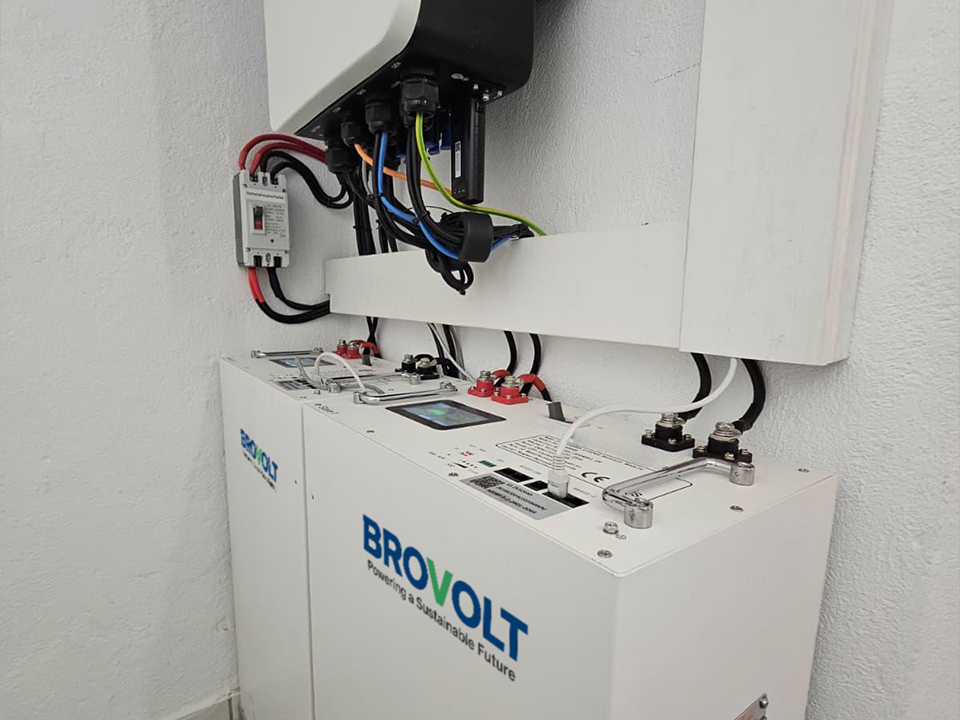
Low-voltage LiFePO4 modules can illustrate the arithmetic behind power sizing, although business implementation requires much more than adding battery capabilities together.
A lot more capability changes the duration calculation. It does not instantly make an item ideal for business peak shaving.
That factor needs focus.
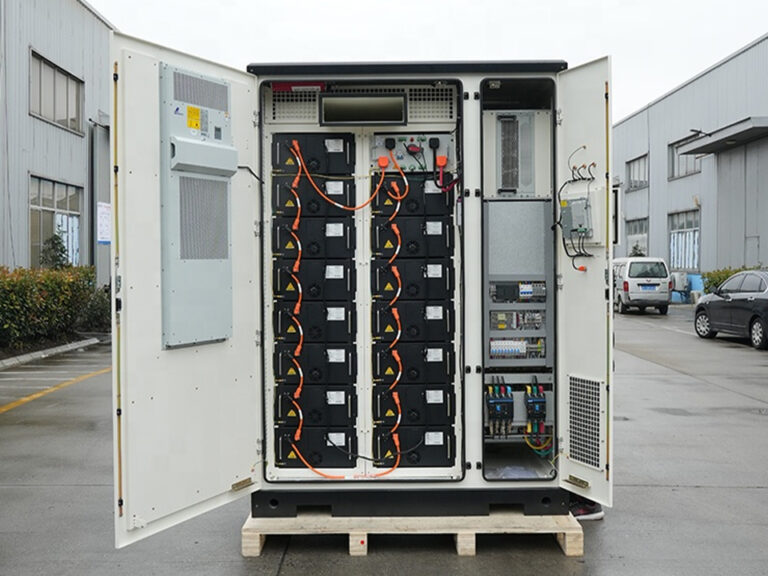
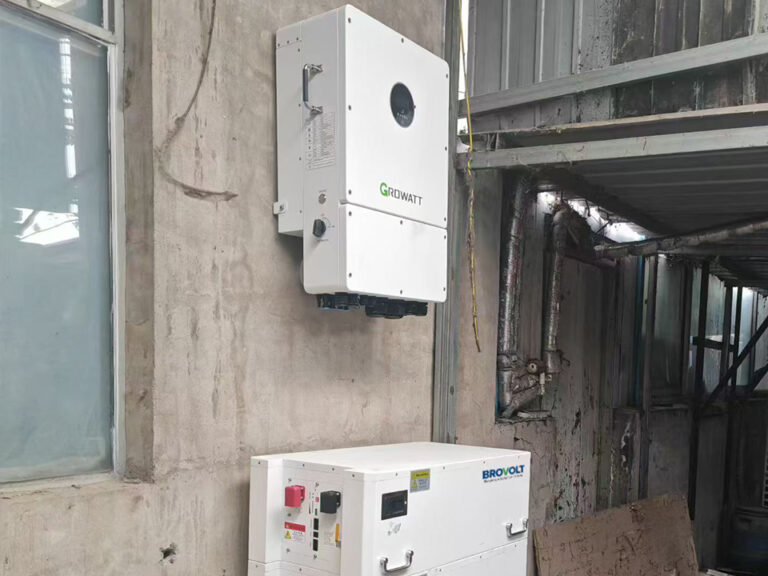
The connected items are recognized as property ESS tools. A business job should likewise attend to system voltage, identical architecture, computer compatibility, fault existing, isolation, communications, enclosure rating, thermal monitoring, fire detection, neighborhood electrical codes, service warranty conditions, and the energy-management system.
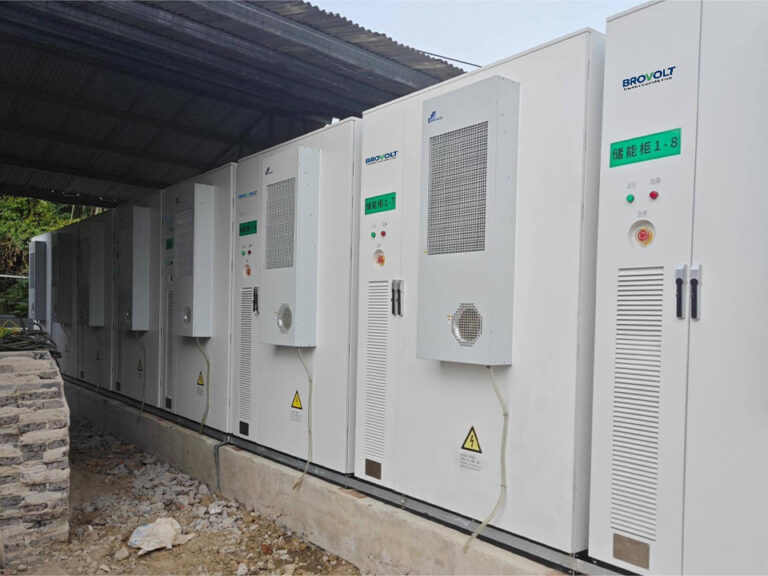
A stack of batteries is not a business BESS.
Battery Capacity Reference Table
The table below compares the provided LiFePO4 product pages as capacity recommendations. Nominal energy is not the like useful a/c energy.
Biggest nominal capacity amongst the provided pages
The 400Ah version is listed at 20.48 kWh, while the 628Ah version is noted at around 32.15 kWh and supports identical expansion according to its item web page.
The table needs to not read as a commercial-system suggestion. It is an ability comparison.
For a real industrial setup, the designer should confirm how several battery units interact with the PCS, whether the BMS sustains the required interactions procedure, and whether the recommended style continues to be within current, voltage, thermal, and guarantee restrictions.
A Better Commercial BESS Calculator Process
A beneficial peak-shaving calculator should run as a time-series simulation instead of a one-line multiplication workout.
Action 1: Rebuild the toll
Paper:
Demand-charge periods.
Seasonal rate modifications.
Billing-interval size.
Demand cogs.
Coincident-peak stipulations.
Minimum payment demand.
On-peak and off-peak energy rates.
Taxes and motorcyclists that change with need.
Action 2: Develop the standard
For every billing month, determine:
Optimum interval need.
Ten highest need intervals.
Period above feasible demand caps.
Time and day of each optimal.
Connection between optimals and manufacturing schedules.
Whether solar generation currently minimizes daytime demand.
Do not analyze just the single highest possible period. The following 5 optimals figure out whether shaving the very first one develops actual cost savings.
Action 3: Select prospect need caps
Examine several caps instead of forcing one solution:
Situation
Need Cap
Planned Use
Traditional
570 kW
Lower battery price and greater dispatch self-confidence
Base case
540 kW
Balanced decrease and capability need
Aggressive
520 kW
Higher academic financial savings with higher operational danger
Maximum cut
480 kW
Stress test, not an automatic layout target
The economically best cap is not always the lowest cap. Deeper shaving might need disproportionately even more kWh since the lots remains above the cap for longer.
Step 4: Mimic dispatch interval by interval
For each and every timestamp:
Read center tons.
Review battery state of charge.
Calculate tons above the need cap.
Restriction discharge to available PCS power.
Limitation discharge to readily available saved power.
Apply conversion losses.
Update battery state of cost.
Record changed grid demand.
Reenergize only when tariff and operating guidelines allow.
Repeat through the complete data set.
Tip 5: Apply functional penalties
Reduce designed performance for:
Battery downtime.
Maintenance.
Forecast mistake.
Interaction failing.
Temperature derating.
Degradation.
Backup-energy reservation.
Unanticipated prolonged heights.
Inverter clipping.
I generally suspect a model that produces the very same yearly savings at 100%, 95%, and 90% system accessibility. That normally indicates availability was never designed.
Action 6: Run several economic instances
At minimum, calculate:
Situation
Main Assumptions
Drawback
Reduced need reduction, faster deterioration, higher running price
Base
Anticipated toll, schedule, performance, and tons development
The investment decision must not depend upon the advantage case.
Step 7: Compare choices
A battery is not instantly the most affordable way to reduce demand costs.
Contrast it with:
Staggered equipment beginning times.
Variable-frequency drives.
Chiller or compressor sequencing.
Thermal storage space.
Automated tons losing.
Power-factor correction where applicable.
Generator dispatch where lawful and economically sensible.
Tariff migration.
Production rescheduling.
Sometimes the best BESS is no BESS.
That may be out of favor in a battery sales meeting, but it is the appropriate answer when a $20,000 controls upgrade can eliminate the very same optimal that a $300,000 storage space project is expected to cut.
How to Evaluate the very best BESS for Business Top Cutting
The best industrial peak-shaving battery is not simply the design with one of the most kWh or the most affordable priced quote cell rate.
Evaluate the total system against these concerns:
Can the PCS deliver the called for kW constantly?
Does usable power cover the lengthiest reliable optimal?
How much ability continues to be after destruction?
Can the EMS projection and control website demand?
Is the reaction quickly sufficient for the payment period?
Can the system recharge before the following event?
Is back-up get called for?
What happens when communications fail?
Are the service warranty conditions suitable with day-to-day cycling?
Does the system satisfy neighborhood electric and fire-safety demands?
Are upkeep, enhancement, and substitute expenses included?
That carries efficiency threat if the forecasted savings stop working?
Vendors often tend to lead with battery capacity. Sophisticated customers lead with tariff technicians and dispatch threat.
We need to too.
Frequently Asked Inquiries
What are business BESS peak-shaving cost savings?
Business BESS peak-shaving cost savings are the verified reductions in utility demand fees developed when a battery discharges throughout billable height periods, decreasing the optimum grid need recorded under the client’s toll while accounting for battery power, functional power, losses, degradation, operational get, send off accuracy, and tariff-specific payment regulations.
The conserving is typically calculated in bucks each month by multiplying the validated decrease in billed kW by the relevant demand-charge price. Energy arbitrage and other earnings streams need to be computed separately.
How do you determine peak-shaving savings?
Peak-shaving savings are determined by mimicing the battery versus interval load data, determining the modified month-to-month billed height after send off, multiplying the verified kW decrease by the utility demand-charge price, and after that deducting billing expenses, overhead, destruction results, and any charges created by tariff ratchets or unsuccessful send off occasions.
The streamlined formula is:
Month-to-month Financial Savings = Post-Dispatch Optimal Decrease in kW × Need Charge in $/ kW
Usage that formula for screening, tentative investment approval.
What details does an industrial BESS calculator need?
An industrial BESS calculator requires interval electricity demand, utility tariff policies, seasonal demand rates, energy costs, peak duration, battery power, useful battery energy, efficiency, operating get, deterioration, schedule, billing restraints, installed cost, maintenance expenses, and the control logic that identifies when the battery fees or discharges.
Without interval information, the calculator can not accurately establish whether a proposed battery has adequate power and duration to control completing peaks throughout the payment month.
What is the difference in between battery kW and kWh?
Battery kW is the rate at which the system can charge or release at a provided minute, while battery kWh is the amount of power it can save and supply gradually; commercial peak shaving requires adequate kW to lower the tons spike and enough functional kWh to maintain that reduction.
A 100 kW/400 kWh system might theoretically release at 100 kW for roughly four hours prior to making up reserve, performance losses, running limits, and degradation.
How large should a peak-shaving battery be?
A peak-shaving battery ought to be sized from the maximum required demand decrease in kW and the duration of load over the target need cap in hours, with additional capacity added for efficiency losses, depth-of-discharge limitations, book demands, forecast error, complementary lots, temperature level impacts, system availability, and long-term degradation.
A preliminary energy formula is:
Nameplate kWh = Called for kW × Height Duration ÷ Usable-Capacity Fraction ÷ Discharge Effectiveness
Last sizing should come from interval simulation.
What is the most effective BESS for commercial peak shaving?
The best BESS for business top shaving is the system whose PCS power, usable power, control feedback, communications, thermal style, guarantee, safety and security architecture, and degraded end-of-life capacity match the center’s toll and interval-load actions at the lowest legitimate life time cost– not merely the battery with the biggest nameplate ability.
The appropriate choice may be a high-power, short-duration system for short spikes or a lower-power, longer-duration system for continual demand plateaus.
Obtain a Defensible Industrial BESS Cost Savings Estimate
Do not buy a commercial battery based upon a common online calculator.
Start with 12 months of interval data, the full energy tariff, and a plainly defined need cap. Then check the suggested BESS throughout every billing interval, consisting of failed forecasts, contending heights, get requirements, degradation, and devices downtime.
The right inquiry is not, “How much can this battery save?”
Ask this rather:
How much costs reduction can this system continuously confirm under the actual tariff after losses, destruction, running limitations, and job prices?
That is the number worth financing.
Evaluation the available battery arrangements, contrast their nominal power and current restrictions, and demand a system-level style that matches your facility’s top account– not an ability quote developed around whichever battery happens to be in stock.