Tell us what you need before you leave. Share your target voltage, capacity, application, order quantity, and destination market, and Brovolt will help you evaluate the right LiFePO4 battery solution.
Get a tailored recommendation, technical guidance, and a fast quotation for your OEM, residential, commercial, or industrial energy storage project. Our team is ready to support your next step today.
How BESS Can Defer Transformer Upgrades and Release Capacity
BESS can create usable transformer headroom by discharging during the few intervals when demand exceeds an asset’s safe operating limit. But successful upgrade deferral depends less on battery nameplate capacity than on peak duration, dispatch reliability, degradation, recharge access, and the cost of the upgrade being postponed.
A transformer might show up overwhelmed on a yearly planning chart despite the fact that the violation takes place for only forty mins on twenty warm afternoons, which suggests the expensive issue is not always insufficient facilities; sometimes it is simply severely timed power demand.
So why replace a transformer for a problem that exists during less than one percent of the year?
That is the commercial disagreement behind using a Battery Energy Storage Space System (BESS) for transformer upgrade deferral. The battery fees when the transformer has spare capacity, then releases behind or beside the restriction when website demand would certainly or else push the transformer past its planning, thermal, voltage, or contractual restriction.
The result can resemble recently launched ability.
But allow us be accurate. BESS does not increase the transformer’s nameplate MVA. It produces operational headroom by managing the web tons seen by that transformer. That difference divides a bankable non-wires option from a sales presentation packed with outstanding megawatt-hours and weak design.
BESS Transformer Upgrade Deferral in One Sentence
A BESS defers a transformer upgrade by providing component of the downstream tons throughout height periods, maintaining the transformer’s measured or forecast packing listed below the limitation that would or else trigger reinforcement.
The operating reasoning is easy:
Internet transformer lots = Center load − BESS discharge + BESS billing
Suppose a center reaches 1,450 kW, but the agreed or technically acceptable transformer limit is 1,200 kW. A battery discharging at 250kW reduces the transformer-side demand to 1,200 kW.
That is the easy computation.
The challenging inquiries are whether the battery can deliver 250kW every time it is required, the length of time the overload lasts, whether adequate state of fee remains after earlier dispatches, and whether the system can reenergize before the next restraint period.
Simply put, power solves the height of the height. Energy addresses its width.
What “Releasing Transformer Capacity” In Fact Suggests
Capability release is frequently exaggerated because project programmers mix 4 various concepts:
Thermal capacity: The winding and insulation temperature level the transformer can endure.
Preparation ability: The utility’s loading limit after applying seasonal scores, projection error and integrity margins.
Link capacity: The optimum import or export permitted under an interconnection agreement.
Company capacity: The lots that can still be offered after a part failing, often assessed under an N-1 backup.
A 500kW BESS does not automatically release 500kW of firm capacity.
It may launch near 500kW throughout a foreseeable one-hour industrial optimal. It might release nothing during a six-hour heatwave if its usable power is tired after the first few hours. And it may get no ability credit scores in any way if the energy does decline the battery’s controls, accessibility guarantees or contingency action.
The hard fact is this: a battery is not strong capability just since its inverter has a multitude printed on the datasheet.
Capability ends up being reputable just after the owner confirms:
The peak is measurable and completely foreseeable.
The BESS is connected on the correct side of the constricted property.
Its power rating covers the overload magnitude.
Its functional power covers the overload duration.
Recharge does not produce a second transformer peak.
State-of-charge reserves endure forecast error.
The controls fall short securely.
Battery degradation is consisted of across the deferral duration.
How BESS Top Cutting Shields a Transformer
Transformer loading develops heat. The partnership is not linear due to the fact that copper losses increase extensively with the square of current, while ambient temperature, prior filling, cooling setup and transformer thermal mass affect the resulting hot-spot temperature.
That thermal inertia matters.
A transformer might tolerate a quick optimal above its continuous rating without immediate damages, while a lower yet endured overload can consume insulation life more aggressively. The appropriate BESS dispatch target is therefore not always a level nameplate limitation. It may be a dynamic limit calculated from transformer temperature level, ambient conditions and recent loading.
I believe fixed peak-shaving controls are oversold. They are low-cost to demonstrate, easy to describe and typically as well unrefined for a significant capacity-deferral agreement.
A more powerful control stack combines:
Day-ahead tons projecting.
Real-time transformer loading.
Ambient and winding temperature data.
Battery state of fee.
Computer power restrictions.
A book margin for projection mistake.
A recovery routine that avoids rebound optimals.
A fallback mode for shed interactions.
A November 2024 PNNL record kept in mind that distributed resources can balance out grid-upgrade prices when their charging, outcome and timing are managed around regional constraints; it likewise cautioned that precise grid data, interoperability and reputable interactions remain barriers to broader implementation.
No mystery there. The battery cell attracts attention, yet the control system makes the deferral.
Power Rating Versus Energy Ability
The initial sizing formula is power:
[P \ geq P \ text -P \ message transformer restriction +P \ text ] The 2nd is functional energy:
[E \ text \ geq \ frac \ eta \ text discharge ] Then the engineer has to add margins for:
State-of-charge reserve.
Complementary usage.
Computer effectiveness.
Temperature level derating.
Cell discrepancy.
Battery aging.
Missed recharge opportunities.
Peak-forecast mistake.
Take into consideration a transformer anticipated to exceed its planning restriction by 400kW for three hours.
The academic need is 1.2 MWh. Yet a 400kW/1.2 MWh battery is uncomfortably limited since that computation thinks best forecasting, complete schedule, no book and no losses.
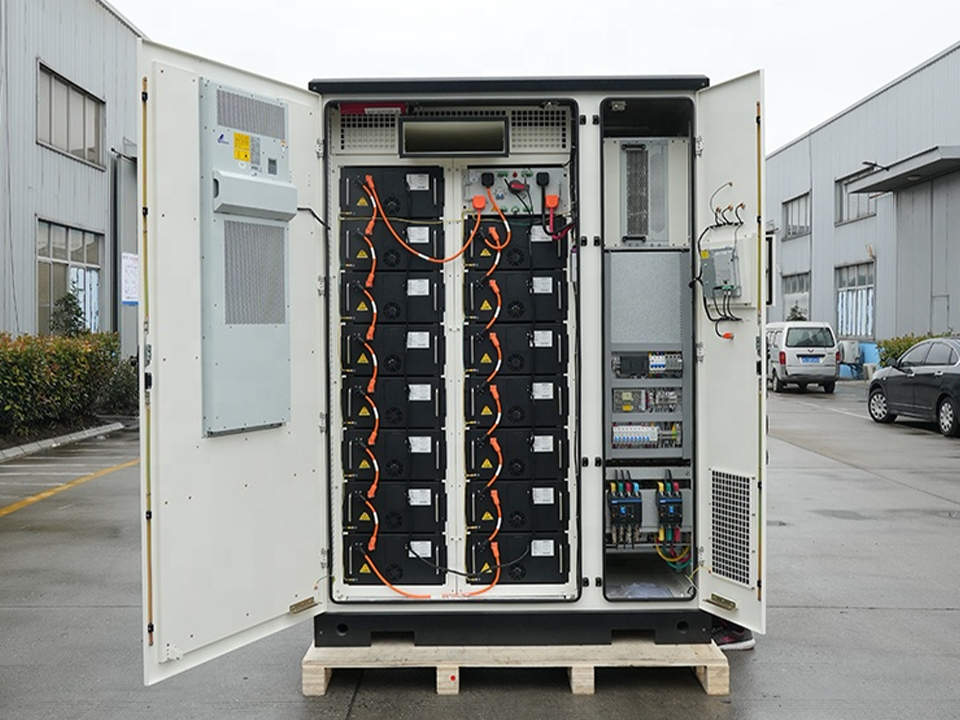
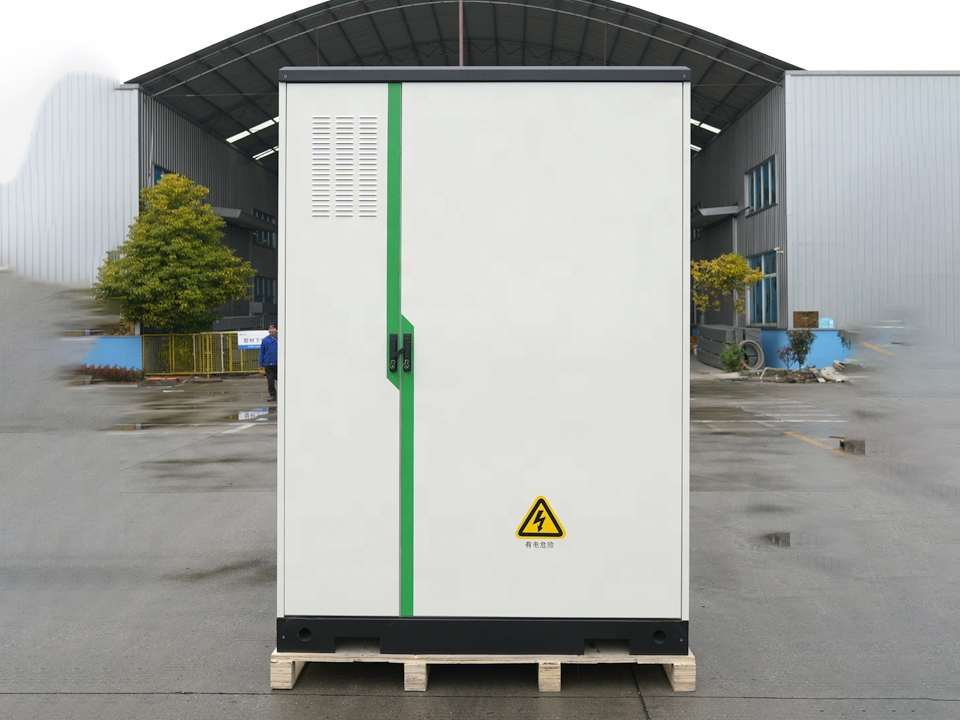
A 500kW/1.5 MWh setup gives more functional clearance. A system such as a 500kW 1.5 MWh containerized ESS for transformer optimal management has a nominal three-hour energy-to-power ratio and sustains grid-connected and off-grid operation, although project-specific derating, reserve demands and computer setups still establish useful capacity.
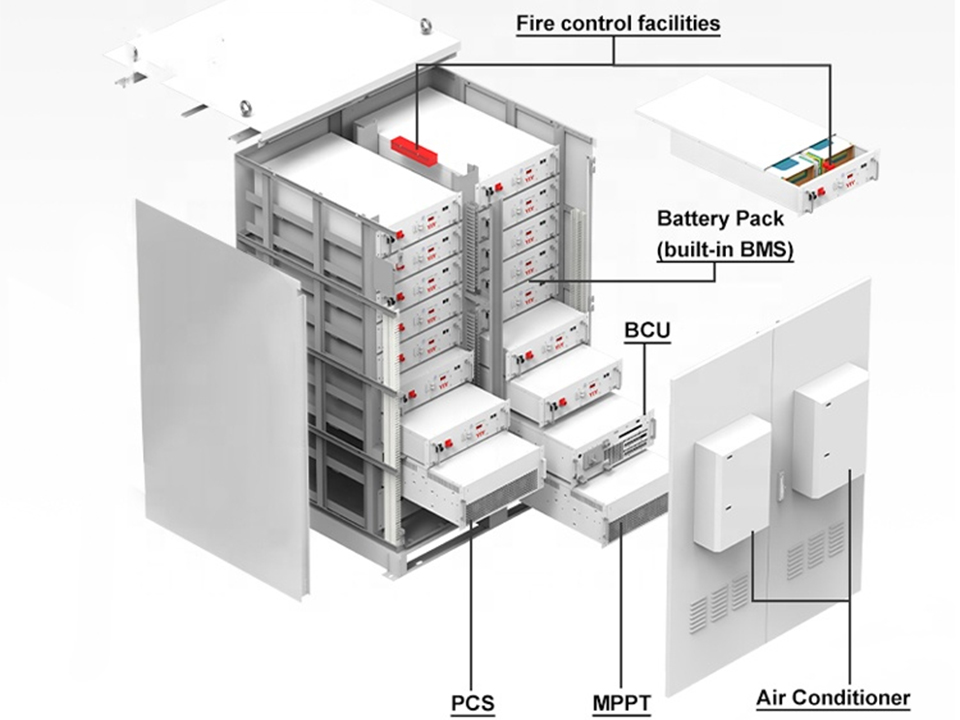
For a much shorter site peak, the 100kW 215kWh all-in-one industrial power storage system deals about 2.15 hours of small energy at its 100kW score. Its integrated PCS, BMS, EMS, cooling and fire-protection design can decrease balance-of-system complexity for smaller sized industrial installments.
For a slightly higher discharge need, a 125kW 241kWh liquid-cooled C&I ESS cupboard offers about 1.9 small hours at ranked power, making it more naturally lined up with brief, focused demand heights than with lengthy evening restraints.
The lesson is blunt: select the system against the overload contour, not versus a rounded purchase number.
Where the Battery Should Be Linked
Area figures out value.
A BESS set up upstream of the constricted transformer might give power arbitrage or market services while doing little to reduce that transformer’s loading. To defer the upgrade, discharge needs to lower existing through the precise possession that has reached its restriction.
Typical link points consist of:
Behind the consumer meter.
On the facility’s low-voltage bus.
On a medium-voltage feeder.
On the secondary bus of a distribution substation.
At a utility-controlled network assistance site.
Behind-the-meter BESS is frequently less complicated to generate income from since the proprietor can stack demand-charge financial savings, toll arbitrage, solar self-consumption and backup power. Yet the utility may not acknowledge it as reliable circulation ability unless running civil liberties, telemetry and send off top priorities are contractually specified.
A utility-side BESS can be dispatched straight against feeder or transformer restrictions, yet its income design might be narrower and its authorization procedure much heavier.
For modular high-voltage projects where the PCS is chosen independently, a 215kWh 768V LiFePO4 high-voltage battery closet can work as a DC storage space building block. The detailed arrangement utilizes 3.2 V, 280Ah LiFePO4 cells in a 1P240S style with a 672– 864V operating array, so PCS compatibility and defense control have to be established prior to purchase.
Bigger websites need a different architecture. The 1.25 MW 2.65 MWh liquid-cooled C&I power storage space system has a small duration of regarding 2.1 hours at full result, with an 844.8 V battery system, 1,250 kW small power and fluid air conditioning. That power course can address materially bigger feeder or substation optimals, yet just where the restraint period fits the readily available power.
BESS Versus a Traditional Transformer Upgrade
Decision factor
Transformer upgrade
BESS or non-wires alternative
What modifications
Physical network score
Net loading during picked intervals
Common action
Passive and continually offered
Active, regulated and state-of-charge reliant
Building influence
Civil works, closures, switchgear and protection changes
Battery pad or container, COMPUTER, controls and interconnection works
Best fit
Persistent load development and long-duration restrictions
Short, predictable and restricted yearly peaks
Capability durability
Long-lived structural rise
Short-lived or conditional clearance
Extra worth
Largely network capacity and dependability
Peak shaving, backup, arbitrage, solar changing and grid services
Key technical threat
Construction, preparation and forecast overbuild
Dispatch failure, deterioration, insufficient duration and recharge problems
Scalability
Usually delivered in big increments
Modular expansion may be feasible
End-of-life concern
Transformer replacement or repair
Cell augmentation, repowering and recycling
Economic trap
Building years before demand gets here
Purchasing storage space that can not defer the ultimate upgrade long enough
Neither alternative wins automatically.
A transformer upgrade is generally superior when the constraint is deep, consistent and growing rapidly. BESS is best when the overload is slim, the upgrade is expensive, the deferral duration has economic value and the storage can make income throughout the other 8,700-plus hours of the year.
What Current Evidence Claims– and What Vendors Overlook
A 2024 study in Electric Power Systems Research examined distributed power resources as non-wires choices and reported that utility-owned storage integrated with other DER sources can minimize 20-year operating expense by more than 40% in its usage situation, creating around $3 million in web existing value. The authors also highlighted that location- and time-specific prices is needed to straighten the grid driver’s requirements with DER-owner business economics.
That sustains the principle.
It does not prove every BESS deferral proposition.
Southern The golden state Edison’s 2024 Localized Autonomous Load Control Administration System pilot offers one more valuable lesson. The pilot was created to connect EV billing according to currently readily available grid capability while managing charging within fixed restrictions till complete network upgrades can be finished. Although it is a flexible-load project instead of a pure BESS task, the operational principle is identical: capacity is launched via enforceable control, not hopeful accountancy.
After that there holds true suppliers need to be compelled to go over.
In December 2024, SA Power Networks evaluated a 2MW/2MWh network-support battery at the Smithfield West substation as an alternative to installing a second 32MVA transformer. The battery was turned down since its advantages were too temporary versus predicted demand growth, while smaller systems can not delay the upgrade. The traditional transformer project carried proposed capital investment of A$ 6.858 million.
This adverse outcome is important. It shows specifically when BESS transformer upgrade deferment falls short:
The overload expands as well promptly.
The called for ability is as well big.
The required period is as well long.
The deferment home window is as well brief.
Storage degradation wears down later-year efficiency.
The conventional upgrade stays needed practically immediately.
Battery storage is not an universal replacement for copper and steel.
Any individual claiming or else is selling hardware, not fixing the constraint.
The Economic Examination for Distribution Network Upgrade Deferment
The economic worth of deferral is not the complete expense of the transformer upgrade.
It is today value of postponing that expense, plus any kind of prevented funding, interruption or construction costs, minus the complete expense and threat of the BESS.
A simplified contrast is:
[\ message = \ message +\ text Piled BESS Revenue -\ message -\ message Residual Danger ] Lifecycle cost need to consist of:
Battery containers or closets.
Computer and transformer devices.
EMS, BMS and SCADA integration.
Website preparation and civil jobs.
Affiliation researches.
Defense adjustments.
Fire detection and suppression.
HVAC or liquid-cooling complementary load.
Preventative maintenance.
Capability augmentation.
Insurance coverage.
Decommissioning.
Shed revenue when capacity is booked for network assistance.
This is where some proposals end up being unsafe.
The monetary design counts every feasible earnings stream– demand financial savings, frequency feedback, arbitrage, capability settlements and backup worth– while quietly thinking the exact same battery ability remains offered for transformer relief.
It can not be committed two times.
When the battery has to protect 80% state of cost for a prospective 5:00 p.m. transformer peak, that energy is not at the same time available for a rewarding mid-day market dispatch. Profits stacking is actual, but running concerns must be modeled chronologically as opposed to totaled in a spreadsheet.
The Control Technique That Makes Ability Bankable
For a major BESS transformer upgrade deferment task, I would expect at the very least four operating layers.
Forecast layer
The EMS predicts site or feeder load making use of climate, calendar effects, manufacturing routines, EV charging, solar result and historical tops.
Precautionary dispatch layer
The battery starts discharging before the transformer reaches its limit. Waiting up until the offense appears can be far too late where ramp prices are high or telemetry is delayed.
Real-time restraint layer
The controller readjusts BESS power against determined transformer tons, current, temperature or an agreed import limit.
Recuperation layer
After the height, the battery charges gradually within extra transformer ability. Unchecked recharge can simply move the infraction from 5:00 p.m. to 8:00 p.m.. The control ideology should also specify what takes place throughout:
Communications loss.
Meter failing.
PCS journey.
High cell temperature.
Low state of fee.
Fire-system alarm system.
Transformer defense procedure.
An unforeseen 2nd height.
The very best capacity-release system is tiring throughout irregular occasions. It lowers power naturally, maintains protective-device control and never ever relies on an operator discovering an alarm in time.
When BESS Is the Wrong Response
BESS is normally a weak deferral candidate when:
The transformer is strained for a lot of the day.
Peak need continues via the night, leaving no recharge home window.
Yearly tons development swiftly consumes the released headroom.
The transformer is old and calls for substitute for problem reasons anyhow.
N-1 needs exceed the battery’s assured ability.
The utility offers no capacity credit rating to non-wires alternatives.
The website can not satisfy fire, access, noise or setback demands.
Market income requires send off throughout the exact same hours booked for peak shaving.
Link functions price virtually as high as the storage space equipment.
The deferral duration is much shorter than the industrial repayment duration.
And in some cases the battery is also little.
A 200kWh closet seems considerable till the overload gets to 300kW and lasts 4 hours. At that point, the system is not a capability option. It is an expensive hourglass.
Just how to Evaluate a BESS Deferment Task Prior To Spending Money
Begin with interval information, not item brochures.
At minimum, get twelve months of 15-minute information; one-minute or five-minute measurements are much better where peaks are sharp. For weather-sensitive networks, several years are more suitable.
Then address five questions:
The number of kilowatts go beyond the target limitation?
The amount of hours does each offense last?
How typically do violations take place?
How much time exists to charge in between occasions?
Exactly how rapidly is the tons forecast growing?
Next, run the suggested BESS versus every period, including performance, minimum state of charge, temperature level derating and yearly deterioration.
Finally, repeat the version under tension situations:
A hotter-than-normal year.
A missed recharge.
One BESS component not available.
A 10% forecast error.
Faster tons growth.
Lower battery capability after aging.
Simultaneous solar underperformance.
A second height on the very same day.
A job that works only in the base case does not launch capacity. It obtains optimism.
Often Asked Questions
Just how can BESS postpone transformer upgrades?
A BESS postpones a transformer upgrade by charging throughout low-load periods and discharging when downstream demand approaches the transformer’s thermal, preparing or contractual limit, therefore lowering the internet power flowing via the constricted property and delaying reinforcement while the battery preserves enough power, power, availability and state-of-charge books.
The deferral lasts only while the battery can reliably cover the overload profile. Rapid demand growth or long-duration heights can eliminate the benefit.
How much transformer capability can a BESS release?
The capability a BESS can launch is the trustworthy decrease in transformer loading that the storage space system can maintain throughout the specified constraint duration after representing inverter limits, functional power, effectiveness, temperature level derating, deterioration, get state of fee, projection error, recharge restrictions and needed accessibility under regular or contingency problems.
A 500kW inverter may supply less than 500kW of acknowledged capacity after these margins are used.
What is the very best BESS duration for transformer peak tons monitoring?
The best BESS period is the fastest readily practical energy-to-power ratio that covers the complete overload occasion, including projection mistake and operating reserve, without wearing down useful state of charge; in several industrial peak-shaving projects this may be 2 to 4 hours, however the appropriate duration has to come from determined interval information.
A four-hour convention ought to never ever replace a real overload-duration contour.
Can BESS permanently change a transformer upgrade?
A BESS can permanently change a transformer upgrade just when the constrained optimals remain minimal sufficient for storage space to manage throughout the job life and when problem, defense, voltage, fault-level and reliability needs do not separately need new tools; even more typically, batteries postpone reinforcement instead of eliminate it permanently.
The distinction matters monetarily due to the fact that a five-year deferral can be successful also when the transformer is inevitably replaced.
What data is needed to dimension BESS for upgrade deferment?
Sizing a BESS for transformer upgrade deferment needs time-series lots measurements, the transformer’s seasonal and emergency situation ratings, thermal or hot-spot habits, ambient temperature, load-growth projections, contingency criteria, recharge windows, toll information, battery efficiency, destruction presumptions, computer restrictions and any kind of energy regulations regulating exactly how dispatchable storage obtains capacity credit scores.
Without these inputs, the result is an item quote, not an engineering layout.
Transform an Ability Restraint Into a Measurable BESS Project
Do not begin by asking how many megawatt-hours to purchase.
Start with the constrained transformer, the precise overload contour, the called for deferral duration and the operating problems under which capability need to remain available. From there, the project can be matched to a portable all-in-one closet, a modular high-voltage style or a megawatt-scale containerized system.